

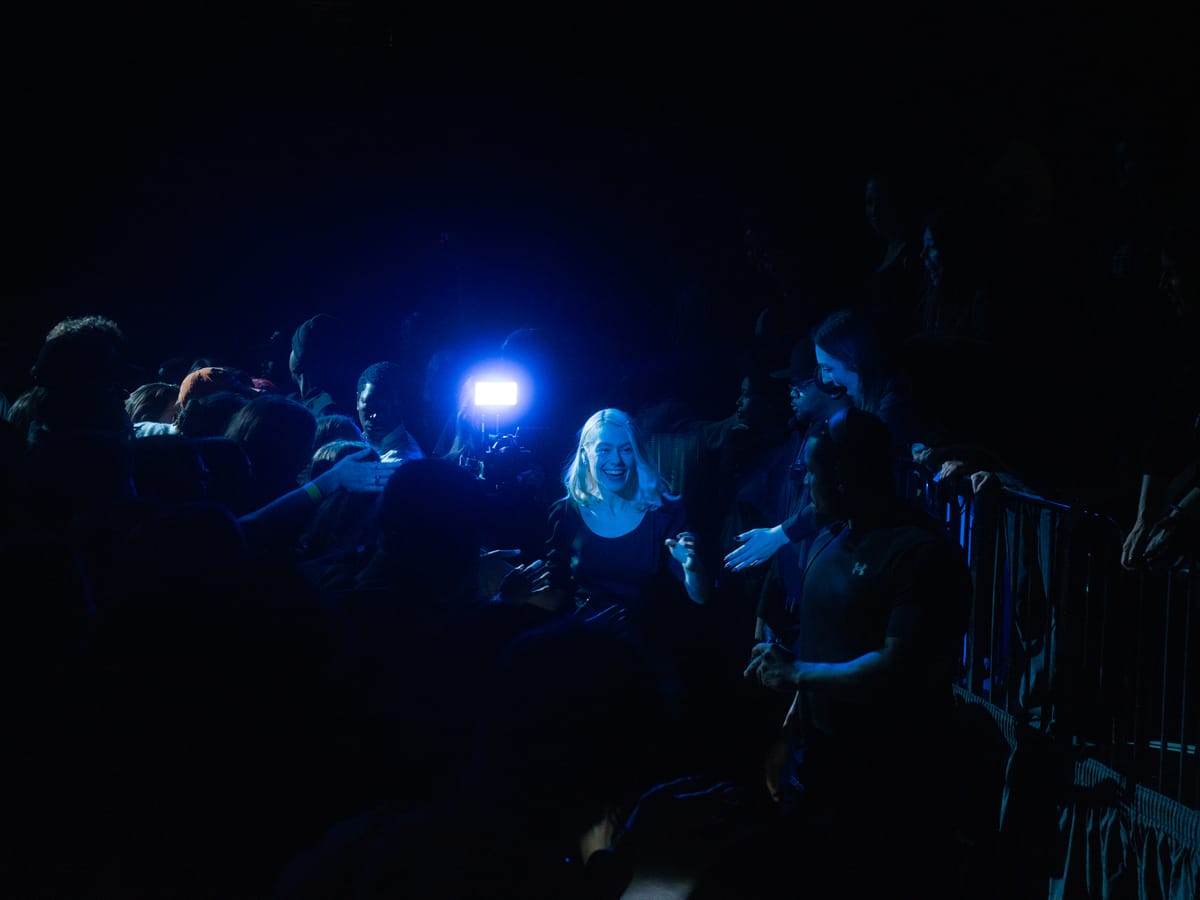
Phoebe Bridgers stood like the moon above a sea of darkened, glassy-eyed faces. This past weekend, the singer-songwriter hosted a three-night residency in Brooklyn, NY, transforming the Barclays Center arena into a dazzling planetarium.
At the climax of her Lost Tour show — an intricate light show promoting her third solo studio album, Lost Weekend — she hushed a roaring crowd, taking a step forward from her crowded inner circle of fiddles, cellos, guitars, mandolins, synths, drums, and trumpets. She was wearing a mournful, all-black attire with silver streaks elegantly lining her eyes; but when she explained the grief and heartbreak (and blossoming love!) that inspired her new record, her voice crackled with warmth, gratitude, and joy. This time around, the light of hope wouldn’t come from the nuclear fallout, but instead within. “We wanted to make the light this time,” she said with a laugh.
Bridgers is one of the leading voices in alternative rock and folk right now, with Lost Weekend serving as the victory lap for all her achievements. She put out her debut solo record Stranger in the Alps in 2017, in tandem with the solo releases of bandmates Julien Baker and Lucy Dacus, with their eventual eponymous boygenius EP a year later. She became a serial collaborator with artists across rock, folk, and pop, even founding another project with Bright Eyes’ Conor Oberst (Better Oblivion Community Center).
All this momentum burst into full-out fever in 2020, when the singer-songwriter released her sophomore album, Punisher. Much more cinematic than its folk predecessor — steeping songs of relationships and ache under the lingering sense of doom brought on by climate change, natural and political disaster, and literal isolation — the record went on to receive four Grammy nominations and widespread critical acclaim.
By the time she had gotten to Lost Weekend, it seemed as though the whole alternative music community had come out in support of her. Her unique, slice-of-life lyricism inspired a whole decade of confessional-type songwriting, especially by women in the scene; indie powerhouses joined the writer’s room and producer’s booth for her latest record; she brought an artist out of early and seemingly indefinite retirement just for a vinyl exclusive bonus track. Not only this, but she can now fill a whole arena three nights in a row and return with a record immediately beloved by the music community, even as it spins away from guitar rock and toward a psychedelic, spacey, synth ether.
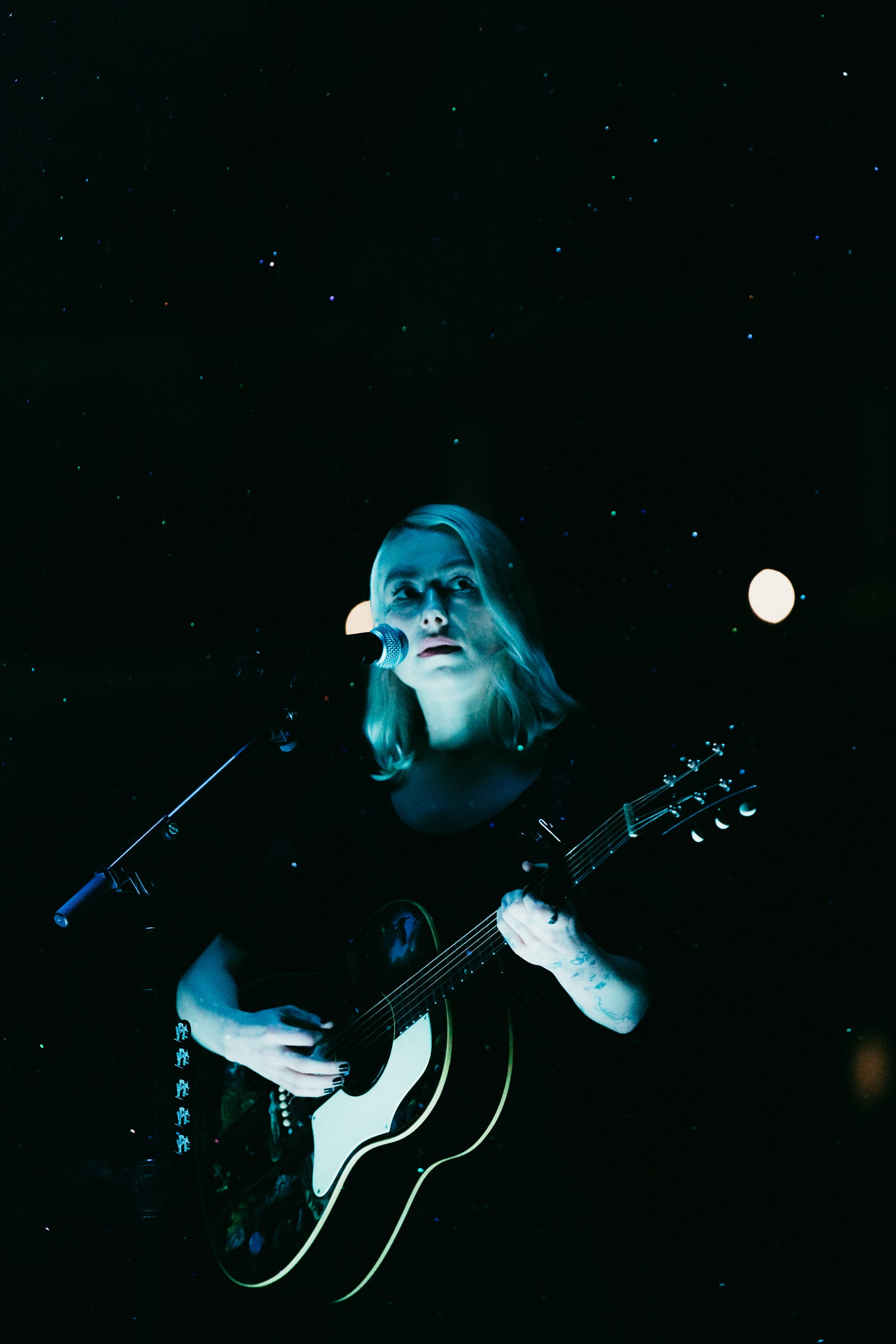
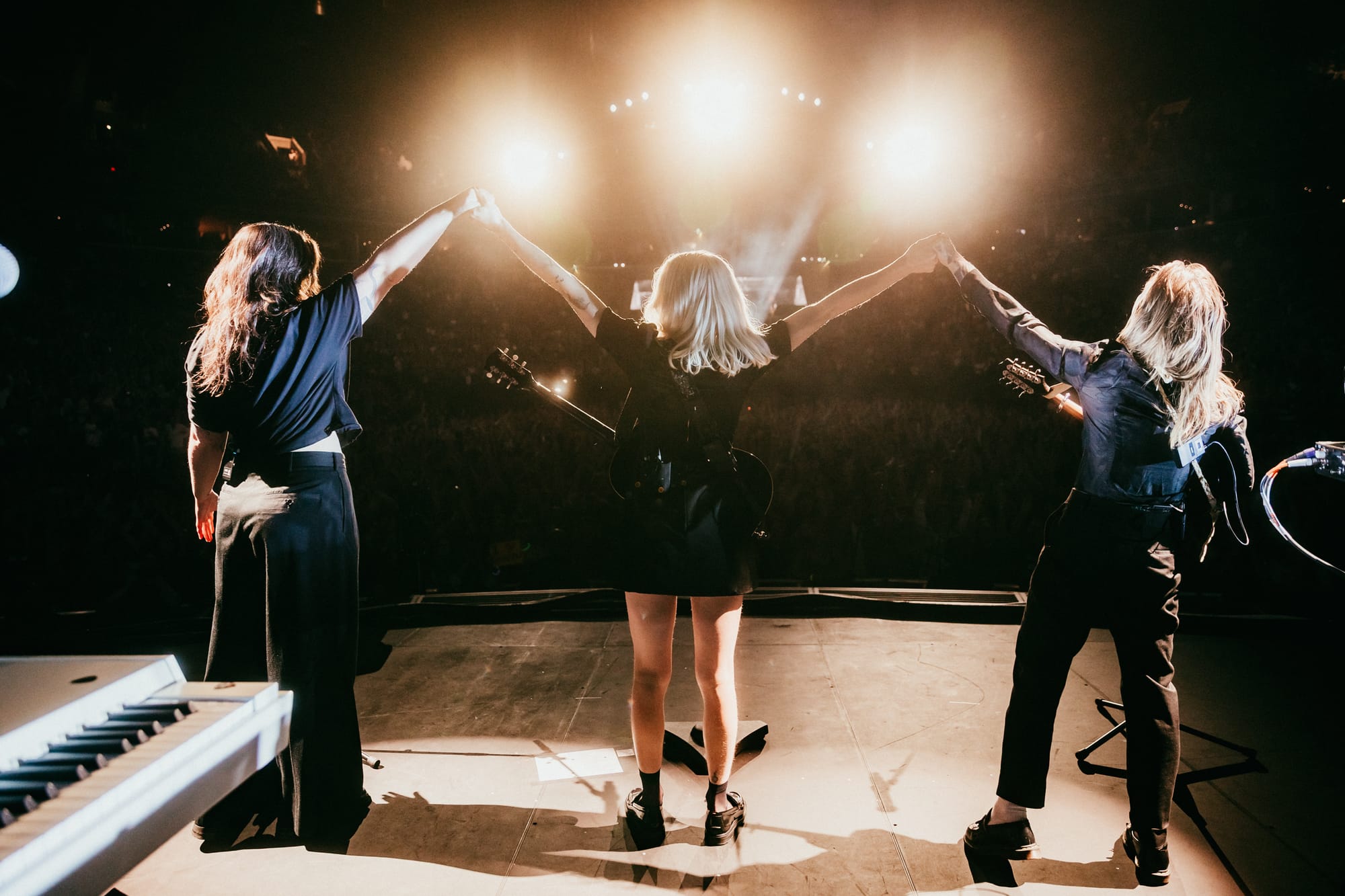
Despite this, I had a personal resistance to Bridgers’ music — some gnawing feeling that, perhaps on theme with the new album, made me an outsider looking into her world on Friday. I had always believed fans had unfairly designated her to be a sin-eater for the feelings of sadness anyone might harbor. It certainly didn’t help that I felt like I blindly walked into a contemporary Christian folk concert on Friday, with disciples dutifully singing with eyes closed, throats trembling, and hearts full until I could no longer hear the band. (Aside: I still don’t get the deafening, rabid excitement for a boygenius interlude, where Dacus and Baker joined for a rendition of “Not Strong Enough” and “Souvenir.” It’s not a reunion if those three are always together!)
But more honestly speaking, I was simply never in the headspace to give Phoebe Bridgers a fair shake. I struggled to get through Stranger In The Alps, perhaps because of the unchanging and quiet tempo, but more so for the overwhelming heartache in each song (“Funeral” opens the scene with someone dying, which is…intense). Punisher had some brilliant expansions in sound (i.e., the trumpets in “Kyoto,” the comforting synths in “Garden Song”), but, since it was peak pandemic when it came out, I choose to at least try to be happy to get through a horrible global event. Years hinging on one hang-up prevented me from truly appreciating her artistry.
But with Lost Weekend, and especially with The Lost Tour itself, I finally let go of such a wrong reading of Phoebe Bridgers, an artist who is undoubtedly magnificent.
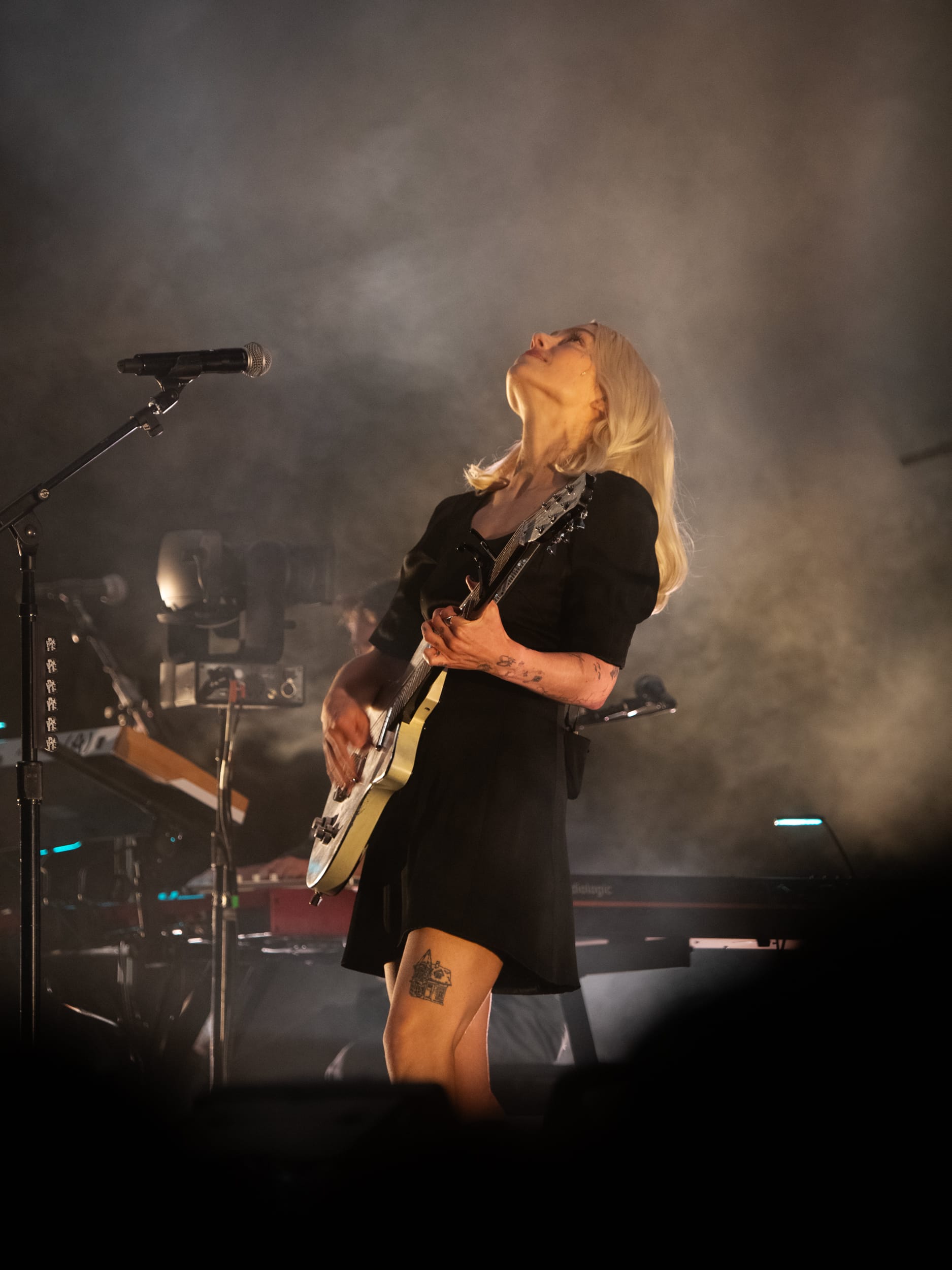
On stage, Bridgers radiates pure confidence and ecstasy, ripping through undeniable hits like “Motion Sickness,” “Kyoto,” and “Lost Boys” with a big, energetic rock band supporting her. Her folk poem “Haunted” — an ode to touring and living her dreams after leaving the darkness of her childhood home — might have been stripped back to a minimal folk strings ensemble, but the glide of the fiddle, the plucking mandolin, and her warm rasp illuminated the entire stadium.
At the doom metal finale of “Kill Me” and the long, screaming bridge for “As Above,” she is a visceral rock star. At “Liberty Tree” and “Bobby,” she is bubbly, giddy, and in love with the world. Even when she debuted “On Video,” the glitchy new rock single she wrote for the film Primetime (which also marks her feature acting debut), she treated it like a fun interlude from a complex hero’s journey story. As well as putting on a fully realized, beautiful story with her discography, she’s also the best at simply rocking out with the band.
Most importantly, her show was a spectacle, offering a night under the stars and planets with one of the most vivid storytellers of the 2020s. When I first listened to Lost Weekend back in August, the titular track, without exaggeration, left me breathless. The synth that shapeshifts into a familiar organ, the lyrics that channel-surf between moods of hope and grief, the suspension of air Bridgers reaches before letting a spectral instrumental ricochet against the walls – a fine balance between tender and grandiose, it’s an exceptionally beautiful song. Live, it is a literal lightning storm.
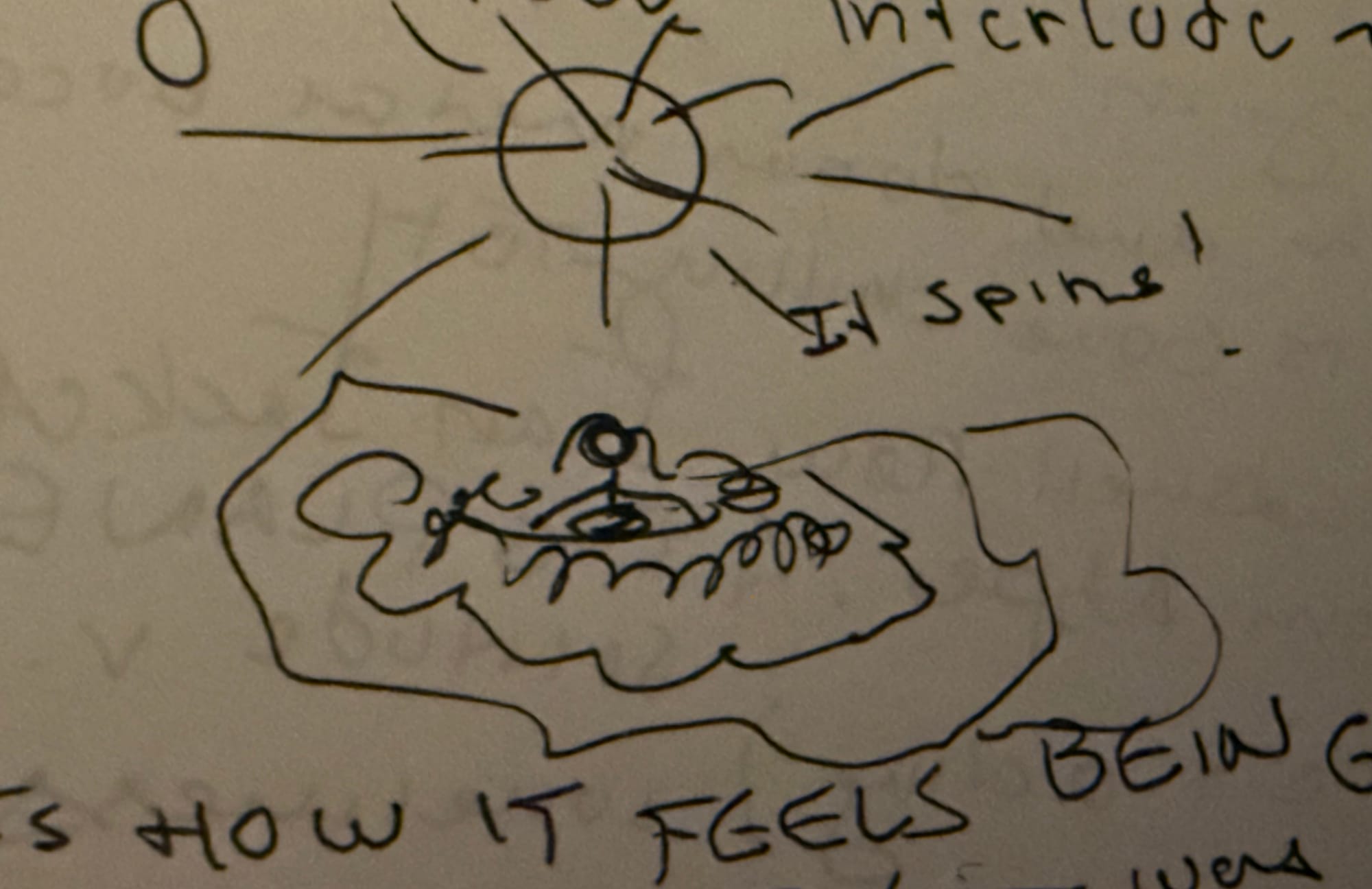
At first, Bridgers stood alone under a spike ball emitting rays of white and cyan lights. Sparkling in her spotlight, she sang the lyrics to a dead silent room; then, flashes, strobes, and cracks of light pour over the ceiling and sides of the Barclays Center into the captivated audiences’ eyes. Her poeticized storm of feeling became a visible, audible thing — an object we could all reach out and take home with us, at least as a memory.
Phoebe Bridgers’ performance at the Barclays Center was a triumph. For most in the arena, she was the strong, talented, and radiant singer-songwriter they have followed and treasured for years now blossoming before their eyes. For me, she transformed from a ghost in the background of my life to a brilliant star.

What do you think?
Show comments / Leave a comment