

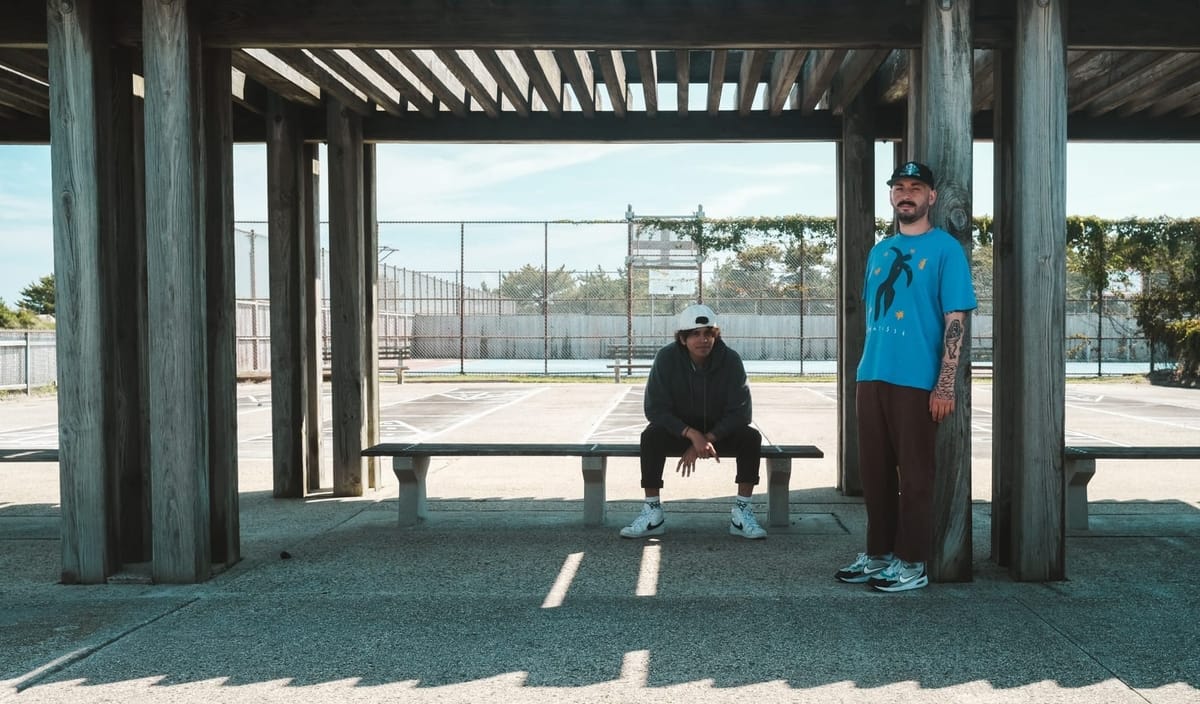
Before this year, the New York Knicks hadn’t won a championship since the 1970s. In fact, the team endured 28 losses scattered across the NBA postseason in the 53 years between titles. Regardless of the team’s success (or lack thereof, depending on how you look at it), Jade Lilitri of Oso Oso has always been a fan. Despite growing up in New York, Lilitri's NFL preference gravitated toward the Midwest – a Chicago Bears faithful through and through, Lilitri was enamored with return specialist Devin Hester’s explosive plays and middle linebacker Brian Urlacher’s relentless ball-hawking. The Monsters of the Midway have been less successful in their Lombardi pursuit, perpetually holding out hope since the 1985 season, but Lilitri embraces the radical acceptance of it all nonetheless.
While specific about his love for sports, Lilitri does not concern himself with the idiosyncrasies that come with being a mainstream band. Oso Oso has routinely delivered critically acclaimed albums since their 2017 record, the yunahon mixtape – largely fueled by Lilitri’s incomparable and infectious amalgamation of emo, pop-punk, and indie.
Even in a world where he pens tracks about “subtle alien vibes,” sneakers, and Gatorade, he manages to amass nods from respected music pundits at publications such as Billboard and Pitchfork. Although the critical praise is a welcome accolade, it’s not what Lilitri set out to achieve. For the Long Beach native, the goal has always been to deliver the best music to fans in the least bullshit way possible.
Those familiar with Oso Oso's music look past the fact that their work has traditionally been lumped into the “emo” genre, despite much of it beckoning otherwise. Albums like basking in the glow and life till bones don an undyingly upbeat prospect on life, i.e., the snappy uptempo of "application" or the unswervingly love-drunk "one sick plan."
Their newest LP, an exchange of information, out tomorrow via Feral Twin, conversely details an uninspired, disheartening journey of failed expectations. Much like the tumultuous history of the Knicks and Bears, Lilitri maintains that it’s all in cohesion with his outlook on life.
In a conversation with Lilitri, we discuss sports, an exchange of information, getting old, and his take on Oso Oso being coined an “emo” band.
This interview has been edited for length and clarity.
Brandon @ TND: First and foremost: congrats on the Knicks championship! As a long-time fan, how did that feel?
Lilitri: [Laughs] Thank you so much. It was super bizarre. On one end, it was absolutely unbelievable. I don't think I've ever seen a championship like that in my life because with New York, there's so many sports teams; there's like two teams. And obviously with basketball, they have the Brooklyn team, but [they’re] not really a thing. There's not a dedicated fan base, so it felt like everybody was super into that Knicks championship, and it just felt like a once-in-a-lifetime thing.
Not to say they won't ever win another one, but I don't think the vibes would be the way that it was. So yeah, it was insane. It was super, super dominant. It felt like you knew a week before that they were gonna be the champion.
You're from New York, but you're a Bears fan. How did your love for the Bears come to be?
I think with football being once a week and all the games are on TV and stuff like that, it kind of allows you more so to pick a different team. When Devin Hester was on the Bears, I just thought [he] was the shit. I thought that team was really cool. They had Charles Tillman, Brian Urlacher, and then I've always just thought bears were sick. So it was just a combination of all that stuff. But mostly Devin Hester, I just loved him. I had to get his jersey.
Devin Hester, the GOAT.
Yeah, truly.
I've heard you say that you weren't familiar with Caleb Williams' game before Chicago drafted him. Are you familiar with his game now?
Oh yeah, I'm definitely familiar now. Yeah, they got me on record saying that I didn't know if it was a good idea.
I think you wanted Marvin Harrison instead.
I know, dude! Look at how that turned out too, right?
It worked out for the Bears.
Yeah, it worked out great. I have no complaints. Obviously, I'll eat my words. I was totally wrong on that one.
There are a few sports-themed lyrics throughout Oso Oso’s new album, an exchange of information (“it’s all bait,” “wind me up,” and “the days”). How much do sports influence your songwriting, if at all?
It’s a big part of my life; I'm a big sports fan. If I have something on TV while I'm doing work or something like that, it's usually just a random sports game. Then before I go to bed, if I'm gonna watch a movie or a show, it's usually the last thing that I'll watch that day before I go to bed. But for the most part, sports are just on throughout my day. Like if I'm cleaning or if I'm coming back home and I have to do something on the computer, it's just on.
So, I guess in a sense it's not so much that it influences my writing, but life does, and it's a big part of my life.
I'm thinking of the line from “it’s all bait”: “I'm not the star you thought you signed / But these refs won't let me shine.”
So, I was writing the song, and there was a Mets game on in the background, and I was just thinking about Juan Soto as “not the star you thought you signed.” I think a lot of this album is stuff that you could drag into relating to a relationship. It also kind of has a double thing going on with the relationship with music and being in the industry and trying to be a career artist.
So, that song you could take it from the relationship side, or you could take it from the musician career side. But it's basically just kind of begging with oneself to not give up on a dream, whether it's doing music or a relationship. So, “not the star you thought you signed” just kind of means "always coming up short." And then the lyrics, "but these refs won't let me shine," just sounded like a dope thing to say, honestly.
Hey, you always gotta take a dig at the refs. Always their fault.
Yeah, and just kind of blaming stuff on circumstance or deflecting blame.
Then in “wind me up,” the whole origin or concept of that song started from this Weakerthans song, or I think there might be a couple Weakerthans songs, but he sings them all from the perspective of his cat. And so on “wind me up,” I kind of wanted to do another double-meaning relationship type song, but one is like an intimate relationship, and the other is one that my dog has with me. The gist of that song was basically my dog breaking up with me. He's just complaining about me watching sports all the time. Picking at flaws that I see in myself and projecting them through my dog's eyes.
And then on “the days,” the line about the jump shot thing is actually like super, super literal. With my girlfriend, we kind of had a couple misconnection moments through life. When we started dating, it was kind of prefaced by a text where she was like, "Okay, one more. One more shot at this. Balls in your court." It was literally what she sent in a text message with a basketball emoji. So that line was just a little nod at that.
an exchange of information is described as “holding onto the ambitions and ideals of youth as they become increasingly difficult to reconcile with reality.” Oso’s albums have always felt less downtrodden and more inspired to me. Was this a conscious shift in tone for the new album?
I feel like you kind of nailed it on the head. There's this inspiring thing to the songs because my outlook on life kind of always ends up in that realm. There's this theme of radical acceptance, and I think if you zone in on that, that's kind of where the hope aspect comes from.
I don't think it really shifted so much with this album. I think the downtrodden side might just be more literal or visceral. But I also don't know, too, because we have a lot of songs on different albums dealing with death. So to me, that's pretty heavy. Whereas, like the song on this album, "she rides in the stars," is about a friend of mine who passed away. I just didn't want to make another song like that, like another death song. So it kind of comes off as a love song, and in a way that's kind of optimistic. I don't know if there was too much of a shift in that.
Similarly, there’s this theme of “disasters” throughout tracks on some of Oso’s albums. For example, “the cool”, “application,” and on the new album, “trace me.” Is this all intentional?
100%, yeah. I don't know if you've ever listened to Weatherbox, but they’re an awesome band; give them a spin when you get a chance. But they, and so many other bands, do this. It was kind of eye-opening to me that, in songwriting, you could do this world-building by taking a word or two or three in a row and own that or brand that, and kind of have it called back throughout your discography.
Brian from Weatherbox is the first guy that I stumbled across growing up listening to music who did that. I thought that was so cool. He talks a lot about “maps” and “the cave,” and you could open it up to your own interpretation, or you could read into what his influences are, and kind of see where he's pulling those words from. But to me, that's always like a cool, fascinating thing with music, and with a band’s discography, it's the little callbacks like that. So it's awesome you caught that, too. Whenever people ask questions about that, I'm so, so stoked. But that stuff is 100% intentional, and there's a couple different lines that we have that you could find if you're reading through.
Also, I will say sometimes people will ask me about ones that I totally missed that weren't intentional. Throughout our discography and even the band that I was in before this, there were a couple references to a “4 am song” or a “4 am.” And somebody was asking me if the first song on the new album [being] called “4 am redemption” was a callback to those things. And I was like, “Honestly, it's not.”
We just named the song that; it was a funny coincidence. Our friend's brother one night came home when we were drinking, and he was like, "You gotta call the album 4 am redemption!" and we were like, "Well, we're not calling it that, but we'll give you a song" [laughs].
What went into the decision to release the new record on Feral Twin? Had Mark Quinlan not approached you, what would this release look like?
I honestly couldn't tell you because I had these songs pretty much written for the most part, and then everything else that happened was just kind of guided by life. And I don't even mean that in a super philosophical way or whatever; I just mean quite literally.
The last record we did ourselves, we were able to make our money back. But it was the first time since becoming a bit of a more established band that we did a record ourselves, and we saw [that process] firsthand. When you do it with a label, there's A, B, and C that goes into it that really helps with getting it out there, and we can't do that ourselves. So it was like, “ideally we'll look for a label” because making records is expensive. So the album would have gotten done no matter what – eventually – at some point. But I just don't know how long it would have taken, because every experience in my life with a label has just been back and forth, negotiations; it takes a long time.
With Feral Twin, it kind of just worked out. We had this talk and there was interest. They were initially asking about repressing old records, but there's a whole rabbit hole that we'd have to go down for that because we don't own the rights, and then we have to get in touch with who does and all that stuff. Then I said, “I'm making new music if you guys want to put that out. If you'd be interested, that's my focus.” And they were like, "Okay, send us some demos." And I was supposed to make the demos that week, and then the person who was recording the demos just wasn't able to do it; they kind of got sick, so we weren't able to. And I kind of just didn't do it, and left it on the back burner.
Didn't hear from them for a little bit, and then it was probably about three, four weeks later when Mark hit me up and was like, "Hey, I've been listening to life till bones a bunch” the last record we did, [and he] was like, “It's awesome. You need how much for a record?” I was basically like, “If you get me [redacted amount of money], I could get a whole record done – mixed and mastered and all that stuff. I could have it on your desk in like two months.”
So he called me up a month later when the demos didn't get done, and he said, "Hey, let's do this 50-50 deal. You said you need [redacted amount of money] and you can make a record?” and I was like, "Yep, if you could do that, I will hang up this phone, and I will call and start booking studio time." And for me, this is just because with stuff scheduled in my life, I was like, “If I don't get this record done in the next like month and a half, I'm not gonna be able to do it for like another three or four months, and then it could be who knows when this is coming out.”
It's also a point in my life, [and] my career, where the band kind of has to stay active to continue being a sustainable thing. We have to be in front of people and stay in their minds and stuff like that. So [Quinlan] was like, "Okay, you got it." That was the phone call. It was a dream phone call because, like I said, every other experience with labels, it was back and forth, back and forth. He was just like, "All right, I could get that for you. Go make your record." And I was like, "Sick."
And then I hit up like three different people, but they weren't able to do it in that time frame. So then I hit up my buddy Dan Maddalone, who's never really made a record like this. He's recorded bands, and a lot of live sessions and stuff like that, but this was his first time ever doing a record like that. But he was like, "I'm game for it."
All those things led the record to being what it was. If we hadn't signed with Feral Twin, maybe if we signed six months later with a different label, there would’ve been a different producer; maybe I'd have scrapped two or three songs that I ended up not liking.
So when I say it was guided by the hand of life, it really was a thing of circumstance.
You’ve mentioned in the past that it was easier to write songs when you were younger. Now that you're older, how much of that affected the process of writing an exchange of information? You're not old, but you’re older now.
[Laughs] I'm old, dude.
It's really hard to explain. It feels like every time you finish writing an album, you go, "Ah shit, I hope I'll be able to do that again.” It feels like, “That's it. I'm out of songs. I'll never be able to figure out another song again.” And then I'll go a month or three without anything coming to me, and the second that I get something that I like and I feel good about, it's like an avalanche that starts slow.
One song comes, and it's like, okay, I feel pretty good about that. Then maybe two weeks later another one comes, and then the next week four come, and then the next week the last five or six come. There's something about just working out this songwriting muscle or getting warmed up or getting loose or whatever. But it's definitely harder; I kind of feel like I'm always trying to disguise the same song, like, what else can I talk about that I'm not already talking about? Because a lot of the songs kind of have the same subject matter.
It's like Stephen King when he sits down to write a book. You basically know the gist of it; you know what he's going to be trying to give you, but he has to figure out how to do it a little bit differently, and that's kind of where I feel like I'm at with songwriting. I'm getting to the point where 22-year-old me and 34-year-old me probably have completely different views of the world. But 29-year-old me and 34-year-old me, we’re not that much different.
There's things in life that'll maybe change that, and as I get older, maybe I'll have something new to say, and that will always come. But it definitely gets harder. And it definitely feels like every time you finish an album or something, you need to take a break from writing or step away, and you go, “Damn, I don't know if I'll ever be able to write 12 songs again.” But right now I have one for the next album.
Speaking of your younger self, you cited your previous releases as an influence on your songwriting for the new record. What elements of Oso's previous releases can you see throughout an exchange of information?
I hope when I say this, it doesn't spoil songs for certain people or something like that. But if you take a song like "trace me" on the new album, that one feels like it's in a very similar vein to “fly on the wall” from sore thumb. To me, it feels like a better version of it, so it doesn't upset me. But there's definitely like nothing crazy inventive about it. It just feels like a song that we're doing maybe better than we've done it before.
Not to go off on too much of a tangent here, but if you take life till bones, I think it kind of has structurally [and] songwriting-wise, this thing that the yunahon mixtape kind of has, where it's not really relying on getting the chorus over the point every time. If the song has two choruses, and that's all it needs, that's fine.
I think on this album, we do a thing that basking in the glow does, where we reinforce the chorus. We're like, “Oh, if this song has a full fleshed-out chorus, we're gonna do it like three times and really try and reinforce that and stick it in the listener's head.”
I could see that on “know you know me better.” Is that what you're going for on that track? That chorus comes back so much stronger towards the end.
Yeah, absolutely. I think that one actually only ends up being twice because we were like, “Oh, the song would be way too long,” but that's the idea where, if we have a strong chorus in that, we want to reinforce that. Or the way that at the end of it, it kind of has that intro motif come back in, and it's a very super heavy melodic section. Like, that kind of works as the third chorus for that one. But yeah, there's definitely that thought going into this record.
You’re no stranger to writing songs from the perspective of a fictional character. Explain the mindset you get into when writing your albums as “concepts.”
I've always enjoyed writing albums more so than just standalone songs, if that makes sense. It's almost the same thing as when I'm talking about how we're referencing ourselves when writing. It kind of gives you a little bit of a nudge or a direction where to go. So if I'm writing a song that maybe feels too slow or too low-energy, it's like, well, if I'm writing this on a thing that's gonna have 12 songs and there's four or five other high-energy songs, that's okay if this one is low energy. It kind of just guides you and reassures you of what the song needs or what it doesn't need to be.
Because I'm sure that you can pick out from different artists where you're like, "This song is a standalone." It doesn't feel like it does much, but in this run of songs on an album, it really hits in a way that's not understood by itself. So I've always loved writing an album and following the ups and downs of that and the arc of that. I think knowing that an album's supposed to have arcs sonically and lyrically, it kind of makes it easy to tap into these characters, so to speak. Have a narrator point of view when you're writing a song and trying to follow along with the story.
I think a lot of songwriters would be bullshitting to say that, in terms of concept albums, a lot of those things aren't made sense of until after the fact. You kind of just are throwing stuff and following this thing that makes sense to you, and then afterwards you start to piece together what is there.
Oso Oso walks the line between emo, indie, and pop-punk. Many argue that these genres are intertwined, although emo tends to take up the most space. What are your thoughts about being lumped into the category of an “emo” band? I know some bands despise that label.
If someone's looking at a painting of an orange that is supposed to be a sunset, and someone goes, "Oh, that's an orange," and then another person says, “It's a sunset,” you can't deny they're looking at the same thing. They're getting two different things from it. That's why people are able to listen to Oso Oso and go, “Oh, it's emo,” and another person's able to listen and go, “Oh, it's pop punk.” They're still listening to the same thing; they're just getting something different from it.
It's definitely framing the mindset of the listener, but if you're into indie rock and you listen to our band and you go, “Ah, it's kind of pop-punk,” I'm okay with that because it's just telling you you're not gonna like it. And if you're into emo and you listen to us and you think it sounds like indie and you don't like it because it's not emo enough, that's okay because you're still probably hearing it fine.
I don't really care too much about what people say about that. I'm totally fine with being lumped into the emo stuff and the emo revival, and I think we did come up in that scene. We were playing in the same basements as a lot of those bands. But it is always interesting because I feel like we're too boring for the pop-punk kids, we’re not really emo enough for the emo kids, and then we're not really good enough for the indie crowd.
So wherever we lie in one of those three things, I'm chill with. I always find it interesting – we get lumped in with the emo stuff a lot, and then when we tour with these emo bands, I don't think it resonates with the crowd, and the same thing with pop punk. And we don't really tour with a lot of these indie bands because I don't think a lot of people see us in that world. So I'm fine with all of it, basically. It's definitely nothing that weighs on my mind a lot, or do I feel like we're getting overlooked, or that people would like us more if people called us another thing. It's really pretty inconsequential to me.
I think a lot of times when bands hate it, they just feel like their music hasn't found the right audience. With us, I don't think that's the case. I think it's just if you listen to it, you pretty much can grasp what it is, aside from maybe the lyrical type of world-building stuff that we were talking about before. I don't think, sound-wise, it's something that if you hear it, you're like “I don't get what they're trying to do.” You're like, “Okay, I get the gist of this band.”
Oso Oso has “no endgame,” as mentioned in an interview with Pitchfork. If that’s the case, what’s on the horizon for Oso Oso?
In the least corny way that this could sound, to basically build a monument to what we've been doing. To try and do this as long as we can, as best as we can, and have it be as big as it can – while doing shit in a way that honors the fact that we've been able to do it as long as we've been doing it because people fuck with it. We're never gonna do any VIP stuff or shit that we think is ripping off fans. We just want to build a monument to this.
One day, when it's all said and done, hopefully there's a whole huge discography, and there's a bunch of people who have memories of seeing us live and having it be something special to them. Something that they felt was real in an aspect that we were trying to branch out and make a connection or make something that's real and lasts with them, as opposed to just taking their cash.
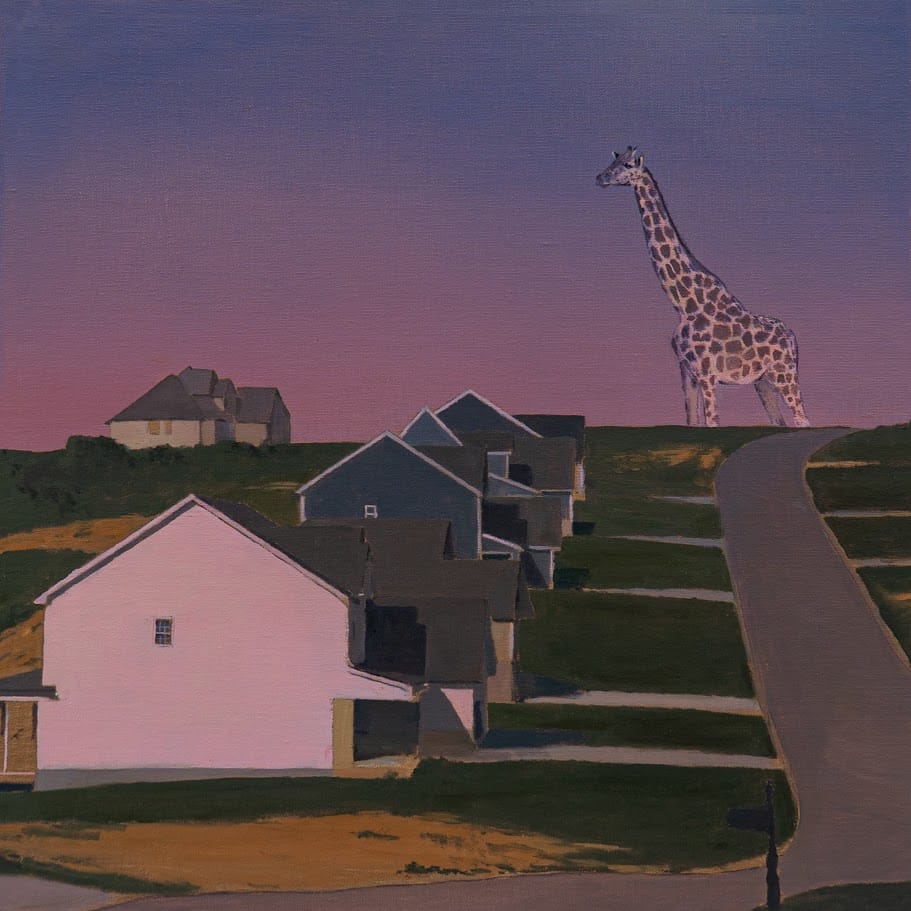
an exchange of information is out Friday, November 6, on Feral Twin Records.
What do you think?
Show comments / Leave a comment