
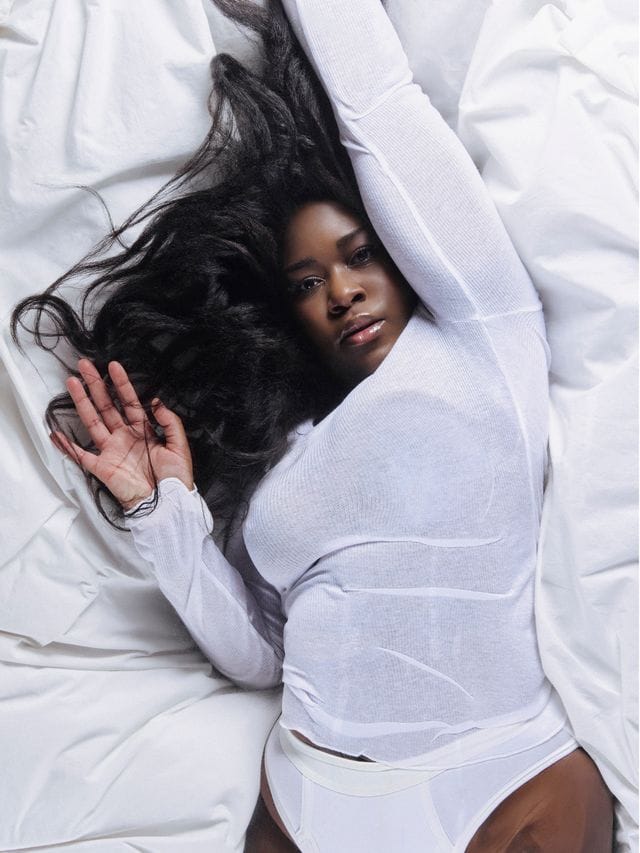
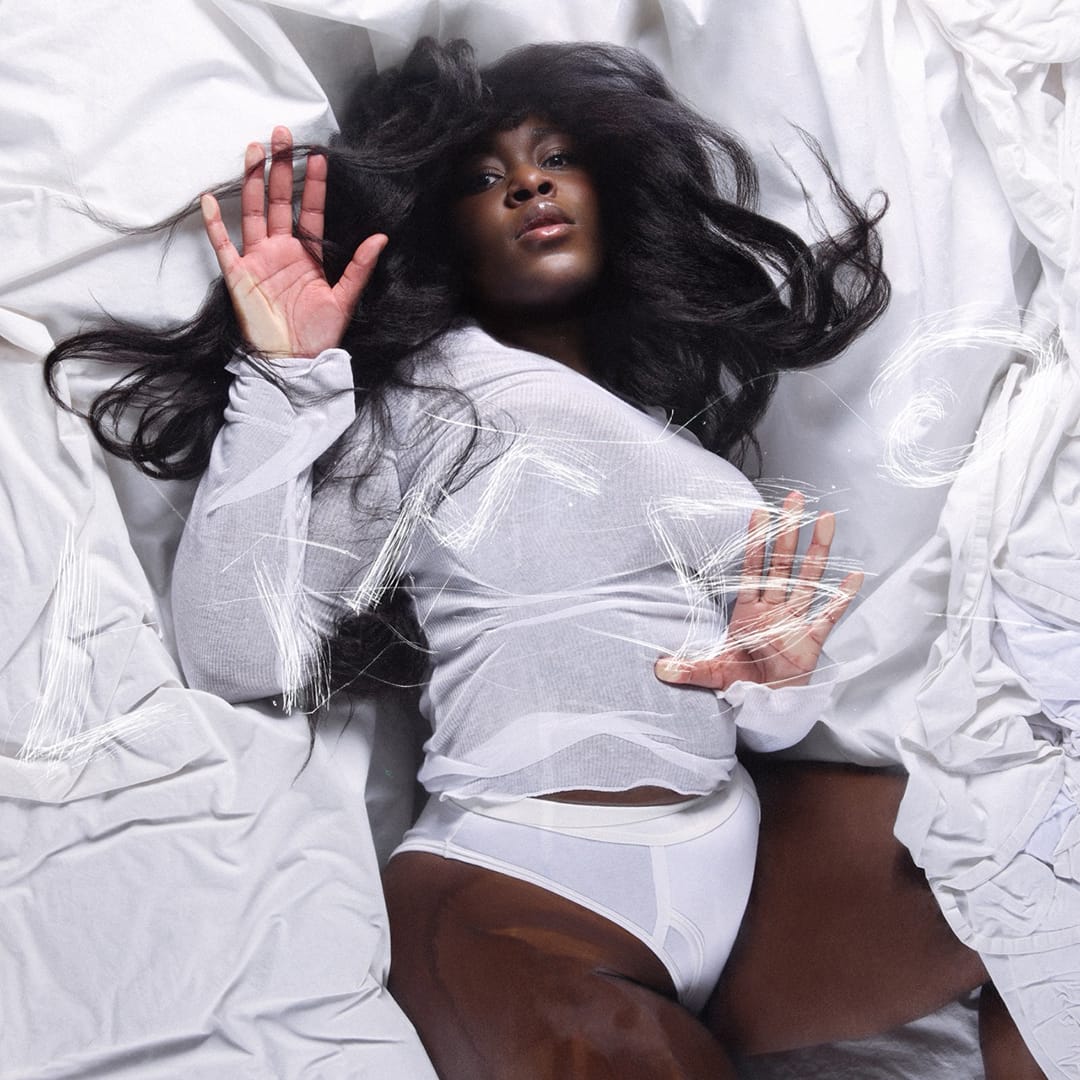
When Naomi Namasenda, known mononymously as Namasenda, joined the Year0001 record label in 2023, she felt like she was in the mud, looking up at the stars wondering if she could ever reach there. "I was in a very weird place," she told The Needle Drop. "I had just left my previous label, I felt like like everything felt difficult, and all of my dreams felt more far away than ever."
The Swedish avant pop artist was looking to simplify, to manifest her ideal vision of a pop star, and create dance music that made her feel like her best self. Then came Limbo, a whirlwind of an EDM pop record that reflects the sheer effort involved in transformation.
Namasenda debuted in 2021 with Unlimited Ammo, released through A.G. Cook's experimental label PC Music, the home for many innovative alumni like Oklou, Hannah Diamond, Danny L Harle, EasyFun, and more. The PC Music presence was definitely felt on the album (marketed as a mixtape): not only were several PC Music artists (and adjacents) in the writer's room — A.G. Cook was main producer, Dylan Brady stuck closely behind — but other musicians like Oklou and Hannah Diamond also got their features, in "☆" and "Steel" respectively.
Furthermore, by using hip-hop with industrial pop production, contrasting Namasenda's delicate vocals with plasticky autotune, and packing as much energy into two-minute hits as possible, the music of Unlimited Ammo was, essentially, PC Music-coded hyperpop. It fit right into the collective's sound.
But, as Namasenda noted in our conversation, she felt like she needed to step away from the label in order to find her own, true sound. In 2023, she relocated back to Sweden to join Year0001, where she met the Swedish producers behind Medium, who joined her for the making of Limbo, which is out today. There, magic happened: she found clarity by stripping herself down to the simplest beats and shimmering pulses, by channeling all her doubts and desires into lyrics that tangle romance with stardom, and by returning to the essentials of dance music to make a solid track.
In our conversation, Namasenda details the making of Limbo, how she found confidence found through hard effort and productive collaboration, how she sees pop stardom, and how she endured a period of great artistic and emotional transformation in the years leading up to her first, proper album.
This interview has been edited for length and clarity.
Victoria @ TND: Limbo is technically an album, whereas Unlimited Ammo was spun as a mixtape. I was wondering what changes you made in approach in terms of direction for this new project.
Namasenda: Unlimited Ammo was so long ago, and I feel like I've grown so much as a person, as an artist, and as a songwriter. The thing is that we called Unlimited Ammo a mixtape, but it is kind of an album, honestly, because it has all of the parts that an album needs. Like, it has enough songs; there’s a very strong theme. I feel like Limbo is the same, but I guess I just put so much work into Limbo. I put a lot of work into Unlimited Ammo as well, but with this one, I felt like I wanted to leave no stone unturned. I had to try everything. So that's also the reason why it took quite a while to make this album.
When you were going into Limbo, you said previously that you wanted to make a record that captures a lot of inexpressible feelings of euphoria and rushes of emotion. It has EDM flare — a more minimal sound than Unlimited Ammo in some ways, because that goes in a hyperpop direction. So, with the feelings that you wanted to capture thematically, how do you think that this shift mirrors the attitude of intuition and immediacy?
You're very right that this album is way more minimal, but it's still very explosive and big. I wanted to ask, “How can we make the most sound with as little as possible?” When we started the songs, we just made them. After a while, we then started going into the details of, “What drums should we have? What kind of synths? Do we need to remove this? Does this actually bring anything?” Mostly, I feel that this album was very intuitive. It kind of just happened, and I feel like it happened to me. Like, all of a sudden it was just done. Obviously, it took a long time, but it felt like I was in this whirlwind of just making the album. All of these songs, it was so intuitive to make them. It felt right, basically.
Could you give me a bit more detail on the actual making of the record and the timeline of producing it?
We started making this album in late December 2023, and we finished it in March 2025, which sounds crazy to me. At that point, I had just met Medium [Isac Hördegård and Hannes Roovers], these guys that I'm working with now. I was in a very weird place: I had just left my previous label, I felt like like everything felt difficult, and all of my dreams felt more far away than ever. I didn't really know what to do, but I just knew that I had to do something. So, we just started slowly, and I was like, “Okay, let's see if is going to be an EP.” After a while, we understood that this is an album; we need to lock in. And then time went really fast and super slow at the same time.
The lyrics in Limbo are interesting because some of them have to do with relationships, sensuality, and feeling the body, but there's also a double-meaning of stardom attached to them. I love the song “Madonna.” It's a fun, weird song. I wanted to know more about it because I feel like there is a way to read it as a song about becoming an artist but written like an ideal romantic vision.
“Madonna” is a lot about getting burnt early on in life — romantically, but also career-wise. Like you said, the whole album is just so much about being in one place and trying to get to the other place where you feel… if I just get there, everything will just solve itself. Like, my life will be perfect. I will be the star, but right now I'm here in the mud. I don't know how I'm supposed to get out, but I'm trying. For me, “Madonna” is a pop song, but it has two choruses, kind of. And it’s structurally weird. But I feel like it works!
Another album highlight for me is “Clermont Twins.” The lyrics are so strange, and I just wanted to know why you wrote an ode to Shannon and Shannade Clermont.
When I was in LA, I was at this party, and I saw the Clermont Twins! I genuinely don’t know what happened to me; I was starstruck for the first time in my life. They have some kind of energy — star power — I just felt it. I've been thinking about them ever since, and then while in the studio, I kept talking about them. It kind of started off as a joke, but then I just started singing about them.
Obviously, everyone knows that they've had a lot of work done, and I was thinking about what it is to be a woman and how you feel like there's always something you need to fix, and you want to look just like ‘the other girl.’ I had so many different themes, and feelings, and thoughts, and this song suddenly became one train of thought that I had and wrote down.
But, the song sounded very different at the beginning. While the lyrics and the melodies that I'm singing were the same, the production was super different. We didn't know if if it would end up on the album, but then, after we were working on it for months, Isac just sent me back what you hear now. And I just felt like, “Okay, I love this. It needs to go on the album!”
The album has a lot to do with the body — not just in the lyrical content, but also working within the genre of dance music. Do you think that song fit into this greater narrative that you were trying to do with exploring this music through the lens of self-realization? Of like, what women do to their bodies, and what women are pressured to do to their bodies. Do you think that “Clermont Twins” fits into that?
It does. It's more so my feelings about it: being torn by wanting to be the “sexy woman” and looking a certain way. I feel like there are so many things with my body that I want to fix, but then I'm more than okay being the way that I am. It's always this war in my head. And I know that I'm not alone with those feelings!
A lot of the album is about that: being at war with yourself, trying to convince yourself that you are enough. I feel like “Heaven” is one of those songs that’s kind of like my looksmaxxing song. I was in the studio feeling ugly as hell, and I was like, “Oh, next summer I'm gonna be this star, I’m gonna lose weight, I’m gonna change my hair, and I'm gonna look this certain way!” I was just thinking about how people would perceive me.
Interesting! Because I feel like a lot of the power of that song comes not necessarily through the lyrics, but through the beat that you've made. I would love to know more about the beats in general, and how you made them so invigorating all by, as you said earlier in this conversation, trying to do the most with as little as possible. What was your ethos for this project?
We were trying out so many different things. I keep saying that word “intuitive,” but that's how it was. The three of us were just in tune with each other, and everything just happened very… I hate to say that word “effortless,” because it didn't really feel that way at the time. Looking back at it, and looking at where I am right now, I kind of have a writer's block, so it does not feel effortless at all right now. But I felt like it was the first time where I was in a room where I trust my own instincts, and I trust the people that I work with, and they trust me as well, and they listen to me, and there's no ego in the room. We made the whole album with that vibe.
Could you give me a rundown of the people that you had in the studio, your main team that you brought together? What did you learn from this new group dynamic?
Isac, Hannes, and I met because their manager actually put us together, which I am very grateful for. We were the core team, and then we had this songwriter called Eric Kasle, who is great and you can also hear him throughout the whole album. You can hear his vocals in “Love Island,” “Madonna,” and a little bit in “Clermont Twins,” I think. I started working a few months in with Noonie Bao & Linus Wiklund, who made one song with me for the album.
I view songwriting — or just meeting new people to work with — almost as dating. You're going to the date or the room not knowing if it's going to be a match. There are some people you have chemistry with, and some people you don’t. Some people can be great musicians, but for some reason, the collaboration’s not working. With this group of people, however, it was a slam dunk. A good match!
I get it. That is extremely important, especially when it comes to writing something so personal and having people that support you throughout.
I felt safe. I think that is the main thing.
I was curious about your transition to a new label and working with Year0001 after PC music, which was your last label. How was going back to Sweden (essentially) and working with this experimental label? How have they supported you on this new project?
I mean, it's been amazing. I have the best manager ever. I know everyone says that, but in my case, it is true! For so long, I felt like my team was working against me in some sense, even if maybe that wasn’t the case at all. When I met Nellie (my current manager), I had dreamt for so long to just have someone on my team who cares about my career as much as I do. She then just manifested out of thin air. I feel extremely supported by this whole team. Just us being in the same city: obviously that does something, and it makes working together so much easier just because we’re like, fifteen minutes away from each other at all times. So it is easier for me, and I’m very grateful.
The “Cola” music video takes place in this sparse, industrial setting, but it also features a lot of dancing and high-power movement. I would say it's a music video of high contrast. So I was wondering how you think the visual language of that music video contributed to what I would say is one of the more straightforward dance songs that you have on the record.
I knew that I wanted to have it be very dance-focused. That was, like, the first thing that I talked about going into it. I was originally thinking, “Should I tell the story that the song is about, or do I just want a cool video with cool shots?” Basically, I wanted a cool music video for once. And I wanted to dance.
Honestly, yeah.
Because that's what dance music is for at the end of the day!
It's for dancing! But do you think there is a way to read “Cola” aside from a fun, hot dance song?
I feel like the best pop songs, to me, always have some melancholy in them. I always reference “Dancing on My Own” by Robyn because that is my perfect pop song. With “Cola,” the beat is very bouncy, but the song is about always feeling like I have to change myself in my relationships in order for the person to like me. Switching out my identity and personality just to fit this new person that I'm with, and being very sick of doing that. I just started writing it because I had been in a situation like that just before, and I feel like it's a reminder to not do that again…But we'll see with the next one. [Laughs.]
To tie that thought back with something you expressed earlier about dealing with a change in your career, wanting more out of it, and as you said, feeling like you're in the mud and you want to go higher. Do you think that there's also a way that “Cola” also applies to that idea of changing for listeners? Or changing your sound for other people in order to have more appeal? How have you navigated sticking to your unique sound?
I'm always at war with those things. What are people going to like? Are they going to like this? How could I be more interesting to other people? I'm really trying to just stick to what I like and what I find interesting. I always have to come back to that. Like, if I like it, then that's good enough. I have done things in the past where I'm not sure about my decision, and it always comes back to bite me in the ass. Always! So I really, really feel like I'm failing at being an artist sometimes, but I really try to stick to just doing what I'm excited about, and hopefully other people are excited about it, too.
What’s one song from the album you were really excited to work on and now see as a final, great piece of music?
One of my favorite songs on the album is “Alright,” the final song. All the songs carry the same theme, but that one just struck me. We were working on something else — I don't even remember what we were working on — and Isac was just sitting there playing with the synths. The chord that became the chorus was playing, and I was like, “Oh my God, I need to record now!” What you hear on the album is basically what was recorded that day. Medium were trying to add stuff and change, but I said that we needed to keep this song as minimal as possible and just the way it is, because that is what makes it so emotional to me. I feel like it gives the listener a window into Naomi and who I am on the inside more than Namasenda.
I'm not sure if I like the song the most because it's the most effortless song on the album. I hate that word because I don't understand why people want things to be effortless. Like, I want to see that someone took their time on making something, and I don't want things to feel relatable. Like, I want to feel like, “Oh, damn… This is cool!” I appreciate a song where I feel like I would have to work my ass off for ten years to do something like that. But yeah, that is my no. 1 song right now, at least.
Interesting. I didn't know that "Alright" was just a ‘first try’ song. I feel like that adds a lot to it, especially playing with this idea of immediacy and impulse. I do have one more question: I wanted to revisit the title of the album, Limbo. How did you come to this one word that embodies everything you discussed throughout this conversation?
I had so many titles written down in my notes, but Limbo was one of the first ones that I wrote down. It came at the very last second, mostly because I wanted to talk about feelings such as – everything is just difficult. I don't know where I'm going, I don't feel like an artist… I know that I am one, but I don't feel like one. Do people even care about me anymore? I'm still not sure about that.
But, I still feel like I need to try, because if I don't, then I'll just regret it. It is my fight against all my doubts and people's nasty comments, as well as the feeling of my career being over before it even started. I don't want to be in limbo anymore; I just need to address the elephant in the room, put it out. Hopefully, I won't be in limbo after this.
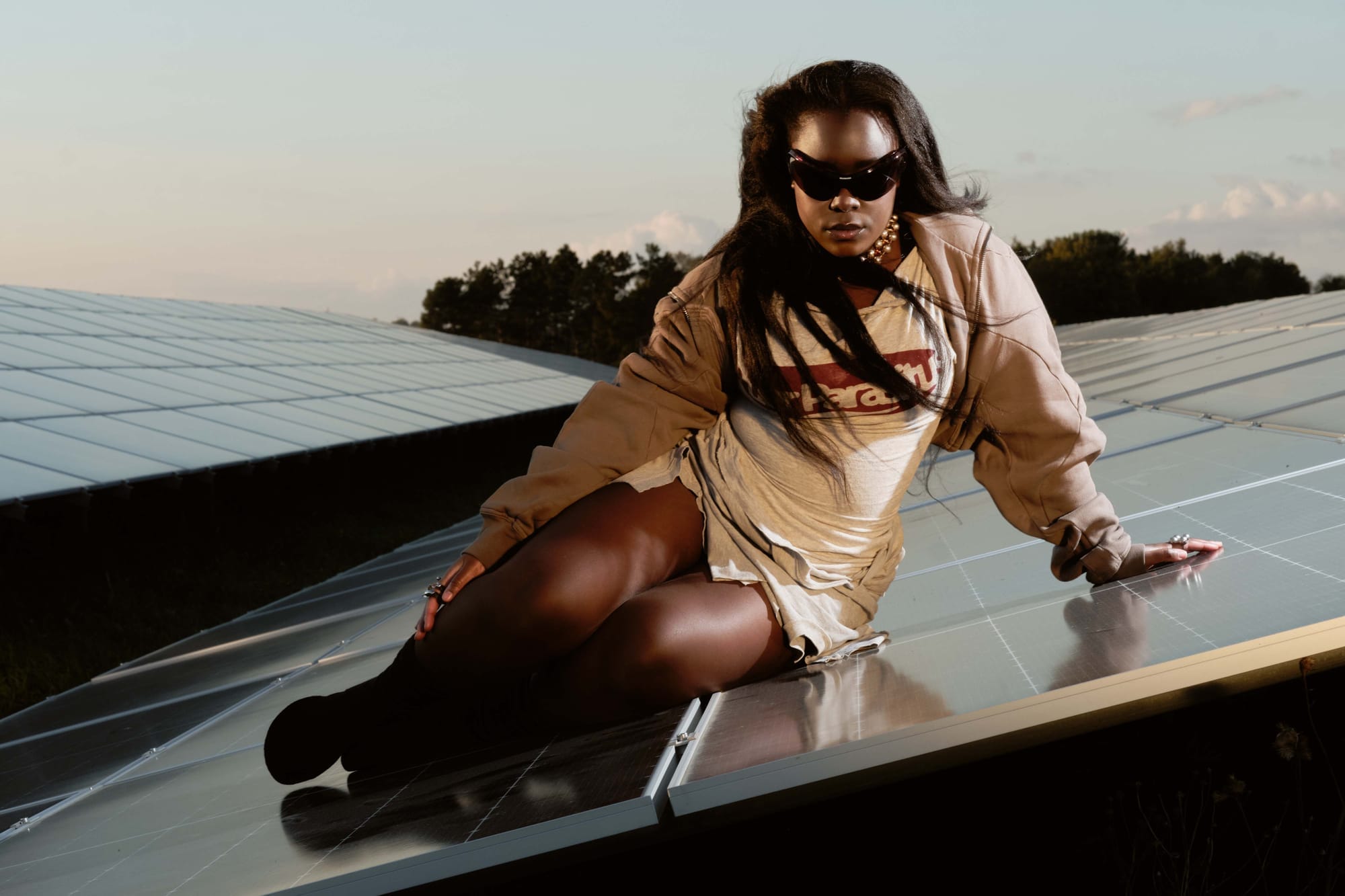
Limbo by Namasenda is out today via Year0001. Pre-save it here.

What do you think?
Show comments / Leave a comment