
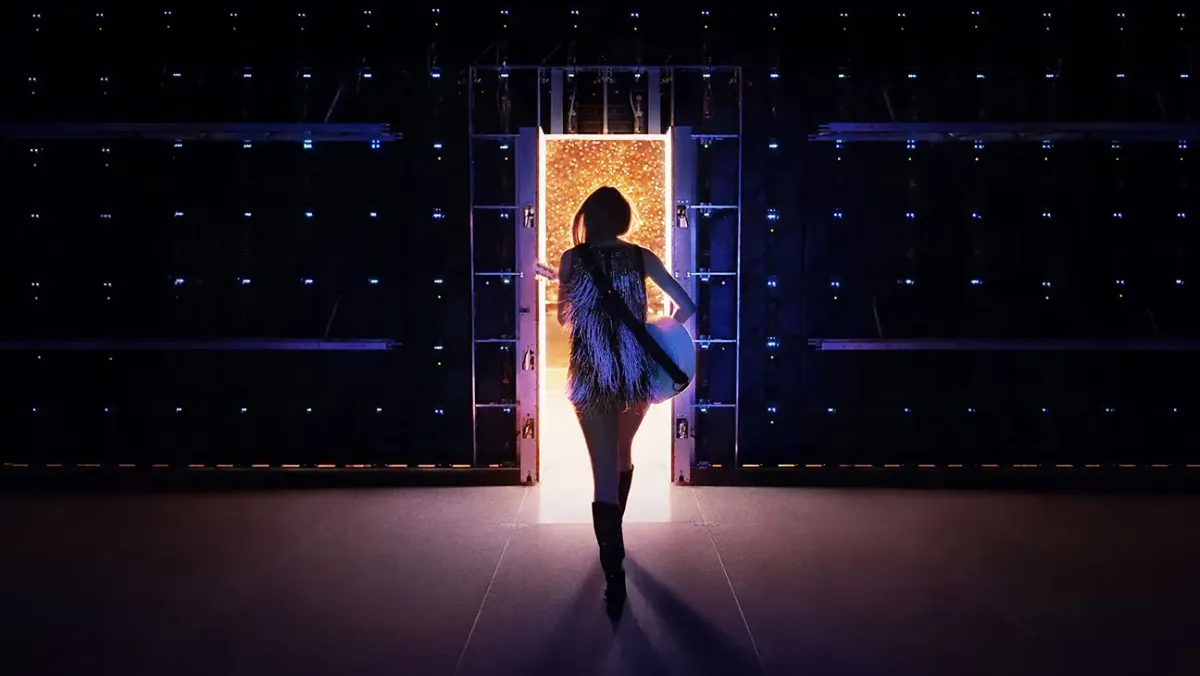
As it was presented in its promotional material, The End of an Era promised to be an "unprecedented" look behind the curtain of the most successful tour of all time. The six-episode docuseries makes good on that promise – sometimes. There are many clips of Taylor Swift rehearsing acoustic mashups in her dressing room, segments of prep for four different guest appearances, and a couple brief diversions to rehearsals of new choreography. But after spending eight or so hours with this miniseries, its intended takeaways are made crystal clear: Swift is a good person, a good boss, and her success has been built on merit alone.
If I wanted to be convinced of the former and the latter though, I would just watch 2020's Miss Americana, the documentary chronicling her career up to its filming in 2019, with a strange and poorly-aged final act of Swift coming out as a democrat ahead of the 2018 midterm elections. In the couple of months since the release of her critically panned twelfth album The Life of a Showgirl, critics (including the very face of this website) have called her character into question as she continues to be an omnipresent cultural force and crosses into multi-billionaire status. Namely, the White House's social media team using Showgirl single "The Fate of Ophelia" for state propaganda was completely ignored by the Swift camp, while her peers were quick to condemn the administration when put in the same position.
So does this new docuseries force Swift's detractors to put a spare foot in their mouths? It depends on how closely you pay attention.
What is included is real, honest footage. I don't believe anyone is flat out lying during a talking head segment or a conversation caught on camera. If anything, Swift is at her most endearing when we hear her speak about her genuine passion for performing. She would not have agreed to rearrange the whole show midway through the tour and learn 20 minutes of good choreography if that weren't the case, let alone perform a three-and-a-half hour set three days a week for nearly two years. The opening sequence of the series is in the green room moments before the start of the final show (a taping of which also premiered on Disney+ the same day). Swift delivers a speech to her backup dancers and singers about basking in the glory of living out their dream despite the copious amount well-meaning advice they had to ignore and combat with determination. The admiration amongst the group of performers huddled in that circle is palpably mutual as they smile through bittersweet tears. It's very sweet.
The real narrative control, though, lies in what is absent.
The cameras are picked up for this project at a low point for the tour, right as the decision is made to cancel the three Vienna shows amidst threats of a terrorist plot. Just a week prior, three young girls aged six, seven, and nine were stabbed to death at a Taylor Swift-themed dance class in Southport, England. In what feels like a genuine and vulnerable confession, Swift is brought to tears discussing meeting the families of the victims and having to keep her emotions and fears hidden, especially while on stage. She likens herself to a pilot having to keep passengers calm amid dangerous conditions. It's a lot of weight to experience as one human being, and the clip is the most memorable of the doc's six hours of runtime. The only other star that's dealt with a circumstance like this (at least in recent memory) is Ariana Grande (albeit more severely and while she was in the building), and it's saddled her with PTSD ever since.
These tragedies, while horrific in their own right, were entirely out of Swift's hands. A world class mental gymnast could not arrive at any logically sound conclusion where Taylor is at fault. However, tragedies that her fingerprints are on are conveniently ignored and/or glossed over by this series.
23-year-old Ana Clara Benevides died from cardiac arrest caused by heat exhaustion at an Eras tour date in Rio de Janeiro, Brazil. The show went on as planned despite a 139°F heat index, and combined with the venue's ban on personal water bottles, over 1,000 attendees fainted in addition to Benevides' death. Since this event, around 100 municipal and state legislatures in Brazil have enshrined mandates for water access at large-scale events into law. Beyond an Instagram Story statement, this tragedy has been swept under the rug by the Swift camp. Its omission here speaks to that continued cover-up.
In this same premiere episode, a detour is taken to give a very brief overview of the tour's beginnings, notably including the ticket buying process. What for the vast majority of fans was a nightmare of 502 errors and endless wait times is boiled down to a proclamation of unprecedented demand as opposed to a planning and infrastructure failure from both Ticketmaster and Swift's team.
The clips shown intentionally obfuscate the abundance of issues with the presale, the cancellation of the general sale due to the presale's mismanagement, and the three separate antitrust lawsuits that followed in its wake. Instead, we are faced with a girl who found herself at a humble 193rd spot in a queue of what could have been several hundreds of thousands of people (dependent on the city), and several people surprising their loved ones with tickets for the holidays. You would think in a documentary that aims to cement the legacy of the highest grossing tour of all time, you'd mention the fact that several sitting senators made Swift lyric puns during deposition hearings, but it's clear those in charge of crafting this narrative found that to be too risky. Why open the can of worms, giving the story stakes, if it means someone may have to take accountability for any semblance of wrongdoing? It's much easier to simply act as if none of that happened at all.
Beyond a couple clips of pre-tour rehearsal footage, any explanation of the making of the tour itself and the labor that executed its logistics are noticeably scant. It's consistently unclear what exactly the plan was for this documentary, or if any/all footage from the first 90% of the tour was scrapped due to the volatility of Taylor's life at the time (as chronicled by much of The Tortured Poet's Department).
Instead, the narrative intrigue leans on the personal stories of dancers Kameron Saunders, Amanda Balen, and Whyley Yoshimura, and backup singer Jeslyn Gorman. Their stories, while inspiring in a vacuum, are packaged in a way that refuses to go beyond the surface, dulling their impacts in the process. Saunders's story focuses on his identity as a bigger gay black man, and how Swift's dedication to representation allowed his dream to dance professionally to come true. He doesn't speak much on identity-based discrimination he's faced, other than mentioning that it is something he has experienced. When discussing the sacrifices his mom made for the dreams of him and his athlete brother, no further details are provided.
The same goes for the stories of the other three performers featured. The ultra-focus-group-tested, inoffensive tellings of their stories elicit a reaction of "oh, that's nice," and not much else.
The identity politics of it all aren't even worth critiquing – there's nothing to get mad at – but I can't help but feel like this runtime could’ve been seized by something less benign. Is it nice to know that Swift didn’t think twice about a male dancer joining an all-female number? Sure. But I don’t think anyone taking the time out of their day to get four hours into an Eras tour docuseries would be particularly surprised or enthralled by that fact.
Whether the lack of insightful behind the scenes footage made way for this brand of moral posturing and drawn-out rehearsal clips is not something I’m equipped to claim with any certainty, but I’m far from the only one that feels this way. The r/SwiftlyNeutral subreddit is an invaluable tool for gauging measured fan reaction to events in Swift’s career, and in discussion threads on this documentary, many were similarly disappointed in the lack of new information or answered mysteries.
The top comment in the thread discussing thoughts on the series as a whole reads as follows:
"I'm a bit whelmed. I found it entertaining and enjoyable overall, but I didn't feel like I walked away knowing much more about the tour or Taylor herself than I did going in. The personal stories about the dancers and band were the best part to me, and that felt like a fresh perspective. There was entirely too much focus on the surprise songs. And even then, it was just a bunch of footage of her rehearsing them, no insight into why she chose them etc. That's my problem with the series as a whole – things were mentioned, but never really explored in depth. And some of the things they did choose to explore in depth were kind of baffling. The Marjorie episode was moving, but what did it really have to do with the Eras tour other than the fact that she performs that song? The last episode felt like a rerun of the first – often literally reusing footage from the first episode. By the last two episodes it really felt like they ran out of things to say about the tour and were running on fumes."
Several other fans noted the lack of legitimate behind the scenes or "making of" segments, as the technological and logistical feat the tour created was boiled down to Taylor touting its status as such without almost any tangible examples as to how the show was executed from her vision. Is there some kind of Krabby Patty secret formula that's obscured so nobody steals it? Did they not think the audience would find it interesting?
Perhaps clips of this will be studied in collegiate communications courses. As clear as it is that much of this series aims for image rehabilitation, its directors and editors certainly pull out all the stops. Chief among them is enlisting Swift's mother to tell a good deal of the story. The use of Andrea Swift as a reliable narrator is a brilliant PR move. To have the singular person that has been there for (quite literally) everything vouching for Taylor, the documentary team are able to get whatever message they want across while shielding Taylor from the weight and potential backlash of anything self-congratulatory coming out of her own mouth.
As Andrea tells the story of the passion Taylor grew for music at a young age and her subsequent determination to be a country singer, Andrea mentions Taylor never using the words "fame" or "money." I don't doubt that that was true while she was still a teenager, but attempting to ascribe that to adult Taylor is just categorically false. This statement from Andrea caused no outrage, but the same could likely not be said if the same sentiment was expressed by Taylor herself.
The filmmakers certainly allow Taylor to speak on the right topics, though, especially as it relates to the physical and mental faculties it takes to be in her position as the star of the tour. When we hear from Taylor directly as a human being as opposed to an entity to be consumed, it’s much easier to be sympathetic to and charmed by her. She is eloquent, and she understands how to treat her people well (i.e. giving performers six-figure bonuses per leg to set a precedent for large-scale tours).
Despite what many were lead to believe by his heavy presence in promotional material, Travis Kelce, while used as a point of intrigue, is far from being used as a crutch to keep people paying attention. They don't give him talking heads, and he's mentioned far more than he actually appears. He is an ancillary part of the story in a way that is appropriate for the role that he played in her life at that time.
As the conclusion of The End of an Era marks what its title suggests, one must wonder where Swift goes from here. The last time she wasn't actively in an album cycle of some sort was the beginning of 2019 before "ME!" (featuring Brendon Urie of Panic! at the Disco) was released. That was almost seven years ago. Does she hunker down and begin a life of quiet domesticity? Will she continue to churn out increasingly bad records every calendar year? Nobody knows. But unlike the people behind this docuseries, it's fun to ask questions.


What do you think?
Show comments / Leave a comment