
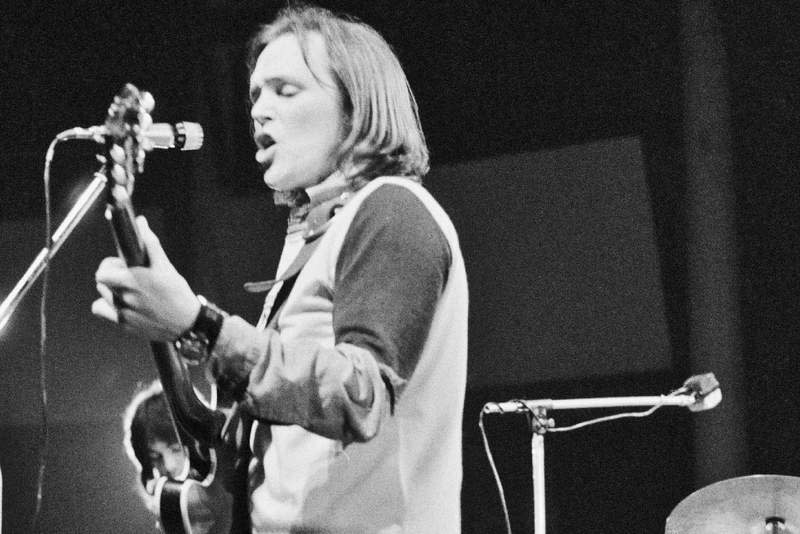
There’s a certain kind of myth musicians tell themselves late at night, usually over a drink, maybe after a gig that didn’t quite land, about what it would feel like to stand shoulder-to-shoulder with giants. To get the call from The Rolling Stones. Or to be asked to plug in with Lynyrd Skynyrd. For most, that fantasy remains exactly that.
Wayne Perkins, though, lived uncomfortably close to that dream, close enough to touch it, shape it, and, in some ways, walk away from it.
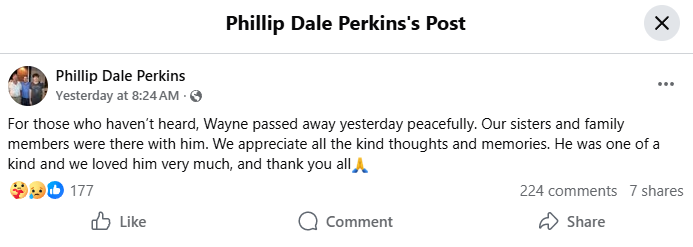
Perkins, the Alabama-born guitarist whose fingerprints are all over some of rock’s quieter corners, has passed away at 74. The news came from his brother Dale, who shared a simple, heavy statement: “For those who haven’t heard, Wayne passed away yesterday peacefully. Our sisters and family members were there with him. We appreciate all the kind thoughts and memories. He was one of a kind and we loved him very much, and thank you all.”
Fans, as they do, filled in the rest. “I was a teenager listening to Alabama Power and I will never forget those times. He was magnificent.” Another wrote, “So sorry for your loss he was a great musician loved and appreciated by many. Prayers for your family may he RIP.”
His path into the orbit of the Stones reads like rock folklore. Eric Clapton recommended him at a moment when the band was recalibrating after Mick Taylor stepped away. The sessions that became Black and Blue were a revolving door of guitarists trying to find the right chemistry with Keith Richards and company.
You can hear Perkins on “Fool to Cry”, “Hand of Fate”, and “Memory Motel”, threading a kind of Southern ache through the Stones’ mid-’70s drift. You can hear Perkins guitar solo on "Hand of Fate" below.
Still, rock bands aren’t democracies, and they’re rarely just about the music. As Richards later put it, “We liked Perkins a lot. He was a lovely player … [but] it wasn’t so much the playing, when it came down to it. It came down to the fact that [Ron Wood] was English.”
Perkins kept moving. He built a career that wove through sessions and stages with names like Joe Cocker, Leon Russell, and Steve Winwood, artists who understood the value of someone who could elevate a song without demanding the spotlight.
There was another almost, too. Ronnie Van Zant wanted him in Lynyrd Skynyrd, a move that could’ve rewritten Perkins’ story in bolder strokes. But it never materialized. Perkins himself shrugged it off with the kind of clarity that only comes from having enough work, and enough self-awareness: “They didn’t need me, and I had a lot of other stuff coming my way.”
And maybe that’s the real story here.
Not the near-misses, or the what-ifs, but the body of work left behind by a guitarist who didn’t need to be a permanent fixture in a legendary band to become part of its sound. Perkins existed in that liminal space, between recognition and anonymity, between hired hand and hidden architect.
He lived in that rare space where respect runs deeper than fame, where other musicians know exactly who you are even if the crowd doesn’t.


What do you think?
Show comments / Leave a comment