
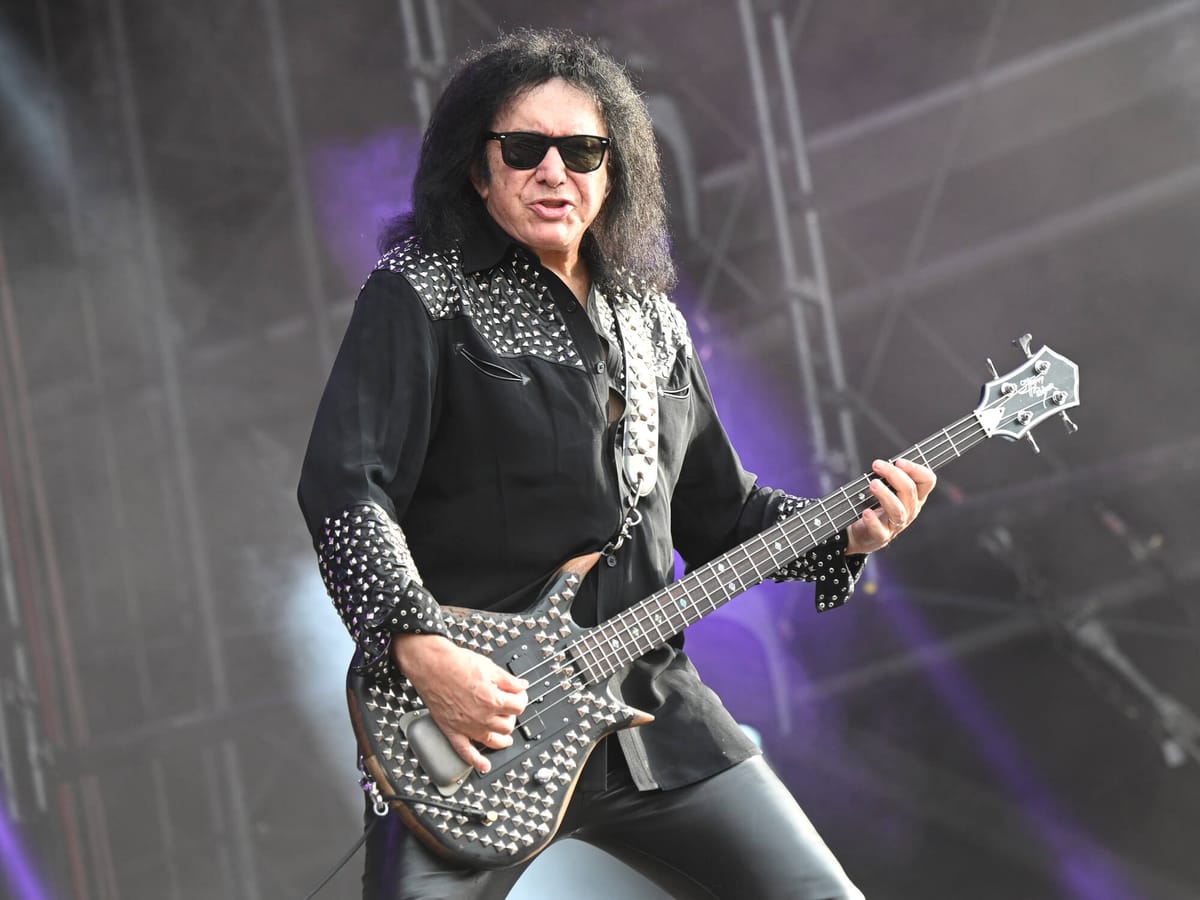
If you’ve ever watched Gene Simmons do an interview, you know subtlety isn’t really part of the package.
The KISS co-founder (and fire-breathing, blood-spitting architect of one of the most merchandised bands in rock history), helped turn face paint and power chords into a billion-dollar empire. KISS didn’t just sell records; they sold lunchboxes, pinball machines, and the idea that rock and roll could be larger than life. Eventually, the Rock and Roll Hall of Fame gave them the nod in 2014. Cool. Long overdue, depending on who you ask.
But now Simmons is side-eyeing the very institution that inducted him.
This is not the first time Simmons has spoken out on the subject. Back in 2016, Simmons controversially told Rolling Stone:
“I am looking forward to the death of rap. I’m looking forward to music coming back to lyrics and melody, instead of just talking. A song, as far as I’m concerned, is by definition lyric and melody … or just melody.”
Rap will die, next year, 10 years from now, at some point, and then something else will come along. And all that is good and healthy.
I don’t have the cultural background to appreciate being a gangster. Of course that’s not what it’s all about, but that’s where it comes from. That’s the heart and soul of it. It came from the streets.”
On a recent episode of the Legends N Leaders podcast, Simmons took aim at the Hall for continuing to induct hip-hop artists while bands like Iron Maiden are still waiting for an invite. And he didn’t exactly whisper it.
“The fact that Iron Maiden is not in the Rock and Roll Hall of Fame, when they can sell out stadiums, and Grandmaster Flash is,” he said, clearly baffled.
To Simmons, it’s less about impact and more about genre purity. He even recalled a conversation with Ice Cube:
“Ice Cube and I had a back-and-forth, and he’s a bright guy, and I respect what he’s done. It’s not my music. I don’t come from the ghetto. It doesn’t speak my language. And I said in print many times, hip-hop does not belong in the Rock And Roll Hall Of Fame."
Cube apparently argued that the Hall is about the spirit of rock and roll rebellion, cultural shift, shaking the system, not just distorted guitars.
Simmons isn’t buying it.
He’s been consistent for years: hip-hop, in his view, doesn’t belong in the Rock Hall. Neither does opera. Neither do symphonies. “How come the New York Philharmonic doesn’t get in?” he quipped, drawing a hard line between what he considers rock and everything else.
Then came the punchline: if hip-hop artists can get into the Rock and Roll Hall of Fame, when does Led Zeppelin get inducted into the Hip-Hop Hall of Fame? (Spoiler: that’s not happening.)
Digging deeper, Simmons framed rap as more spoken-word poetry layered over beats rather than what he considers traditionally complex music-making. He was quick to clarify that he doesn’t hate hip-hop, he respects the hustle, the cultural weight, the success. It just doesn’t connect with him. “It doesn’t speak my language,” he admitted.
At the end of the day, Simmons knows he’s not on the voting committee. The Hall’s inductees are decided by a body of industry insiders and artists who’ve steadily broadened the definition of what “rock and roll” means. And whether you agree with Simmons or not, that definition has been stretching for decades, from R&B to punk to hip-hop and beyond.
Still, this debate isn’t going anywhere. The Rock Hall of Fame has long operated more like a cultural museum than a genre gatekeeper, and that evolution rubs purists the wrong way. Simmons just happens to be loud enough, and legendary enough, to keep the argument alive.


What do you think?
Show comments / Leave a comment