

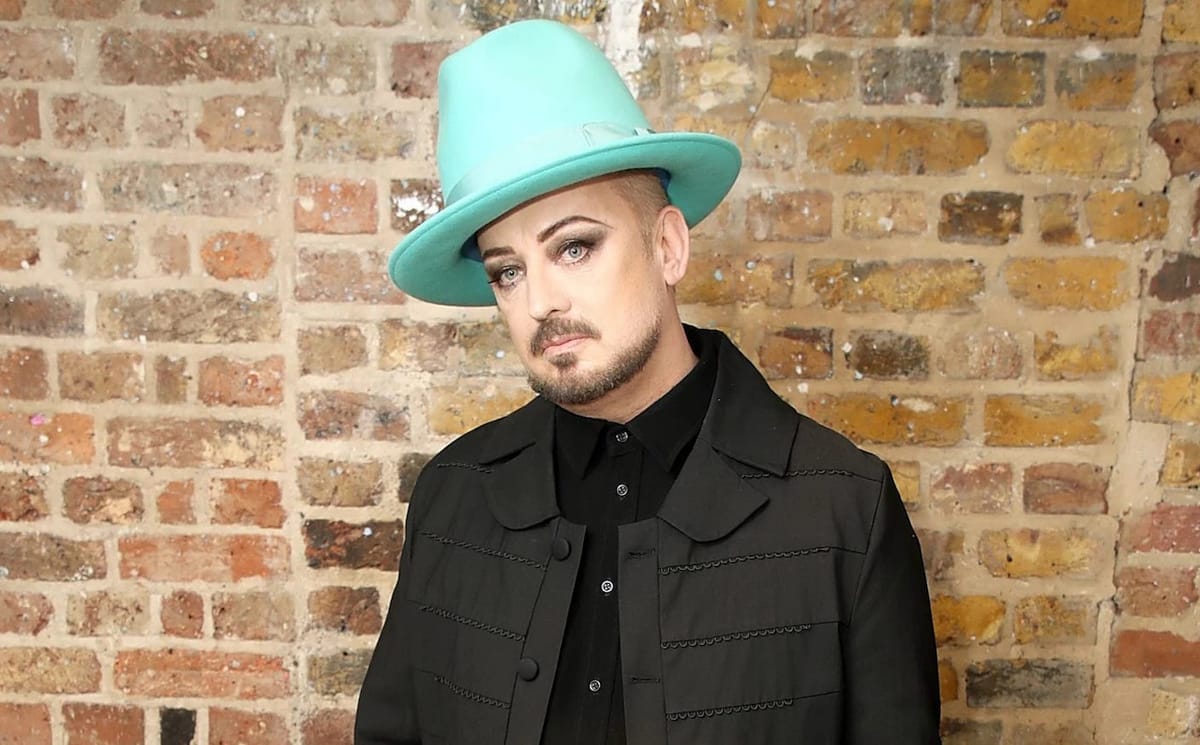
For more than 40 years, Boy George has been singing “Karma Chameleon.” But owning it? That's another story.
Now, the Culture Club frontman is looking to change that with a new company called Artists Included, a venture designed to help legacy artists regain some control over their most recognizable songs through AI-assisted re-recordings.
The company's first release is a newly recorded version of “Karma Chameleon,” unveiled Monday. While the vocal performance was recorded by George today, artificial intelligence was used to recreate the sound of his 22-year-old voice, effectively blending a modern performance with the tone fans remember from the original hit.
“It’s hard to get excited about something that you don’t control,” George said in a recent interview. “This gives me an opportunity, not just me, but other artists, to have a different relationship with those songs.”
The launch comes at a time when the music industry is still trying to figure out exactly what role AI should play. Record labels have spent the last few years fighting unauthorized voice cloning and generative music platforms, but George and longtime manager Paul Kemsley, better known as PK, see an opportunity to use the technology in a way that benefits artists instead of replacing them.
According to Kemsley, the idea took shape after a major licensing deal involving “Karma Chameleon” underscored how little control many artists have over the songs they're most closely associated with. He says a Virgin anniversary campaign licensed the track for around $4 million across several uses, with the revenue going to the owners of the master recording and publishing rights.
“Four million changed hands,” Kemsley says. “George didn’t get anything at all.”
That experience ultimately led to the creation of Artists Included. Instead of recording a straightforward new version of the song, George and Kemsley began exploring whether AI could faithfully recreate the sound of George's original 1983 vocal, creating a version that could potentially compete for future sync licensing opportunities.
“When I heard it, I was absolutely gobsmacked,” George says of the finished track. “It sounds like another take from that original session.”
The pair are careful to distinguish the process from the AI-generated voice cloning that has sparked concern throughout the music business.
In this case, George recorded a brand-new vocal performance. That recording was then processed through an AI model trained on archival recordings and other materials connected to his own voice. The goal, they say, wasn't to create a fake Boy George vocal, but to enhance a real one so it sounds like the singer did in his early twenties.
For George, the project isn't only about ownership or licensing opportunities. It's also about reconnecting with a younger version of himself while bringing decades of life experience into the performance.
“It has the sound of me at 22 years old with all the experience of everything that I’ve learned,” he says.
Kemsley views the concept as a technological extension of the playbook popularized by Taylor Swift's successful re-recording campaign.
“If AI is used correctly, it can return value to the original creators,” he says.
Still, whether AI-assisted re-recordings can achieve the same kind of success remains uncertain. Swift's "Taylor's Version" albums are clearly defined as new copyrighted works that she owns. AI-powered recordings exist in a much murkier legal environment, with courts and copyright experts continuing to debate where human authorship ends and AI involvement begins.
Artists Included argues that its releases are fundamentally human creations built from fresh performances by the original artists. But questions surrounding ownership, copyright protection, and how these recordings can compete with the originals remain unresolved.
Looking ahead, the company plans to work with more heritage artists, particularly those from the 1980s and 1990s whose biggest recordings are still controlled by record labels rather than the artists themselves.
Whether the industry embraces the idea is another question entirely. The legal and business implications of AI in music are still evolving, and debates around copyright, licensing, and artist rights show no signs of slowing down.
For George, though, AI is simply another creative tool.
“I’m not frightened of it,” he says. “You still need imagination. You still need an idea. You still need a desired outcome.”

What do you think?
Show comments / Leave a comment