
During his Super Bowl halftime show, Puerto Rican singer Bad Bunny caused a stir in Brazilian social media when he declared "God Bless America" and proceeded to list nearly every country in the continent, including Brazil.
Brazil is, geographically and historically, part of Latin America. But Bad Bunny's including of our country in his list revived a national debate: are Brazilians actually latinos? It may sound like an obvious yes abroad, but inside the country, the answer is far more complicated, and the conversation around it has shifted significantly over the last few years.
That was the debate hovering over Bad Bunny's two stadium concerts in São Paulo, which took place this weekend – one that sparked thinkpieces, articles, and social media debate. But there was also a more specific question to be asked, one that centralized the impact of Bad Bunny's music and career: after dominating the world, could the artist conquer his last frontier – Portuguese-speaking, continental Brazil?
Although Bad Bunny has been one of the most streamed artists in the world for years at this point, this has not translated completely in Brazil. When he released the acclaimed DeBÍ TiRAR MáS FOToS in January 2025, none of the songs made it into Spotify's Brazil Top 50 charts (Spotify is, by and large, the most used streaming platform in the country).
At the same time, the musician's first announced date in São Paulo sold out within hours, which guaranteed he got one more. I went to the first date, on Friday (Feb 20), just after the Carnaval holiday in Brazil.
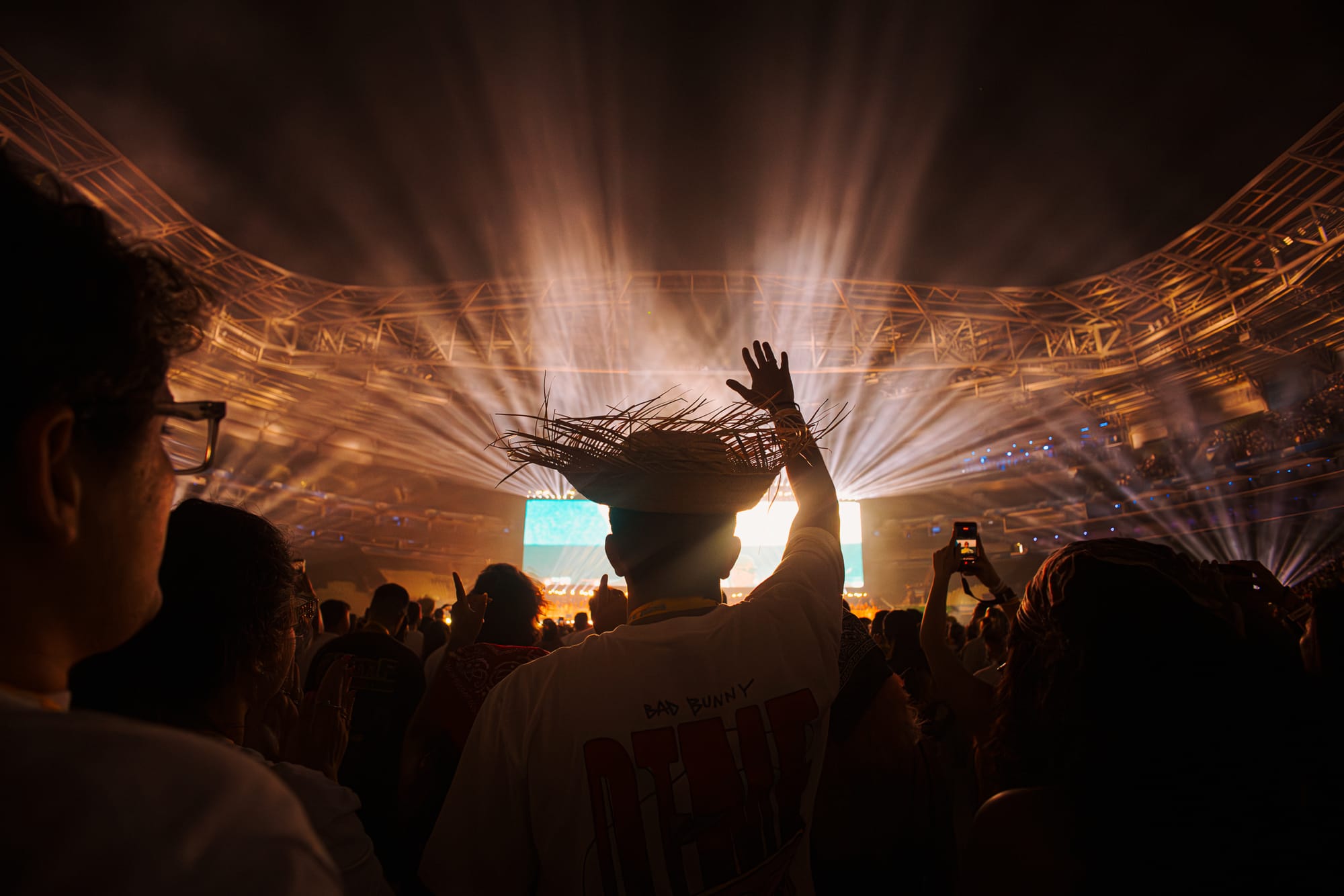
Carnaval and its big street parties could've had a flattening effect on Benito's concerts – after all, after four days of partying and traveling, it's possible his audience would be tired. But it seemed to be quite the opposite, actually: energized by our big holiday, over 40,000 fans showed up to Allianz Parque ready to see one more big spectacle.
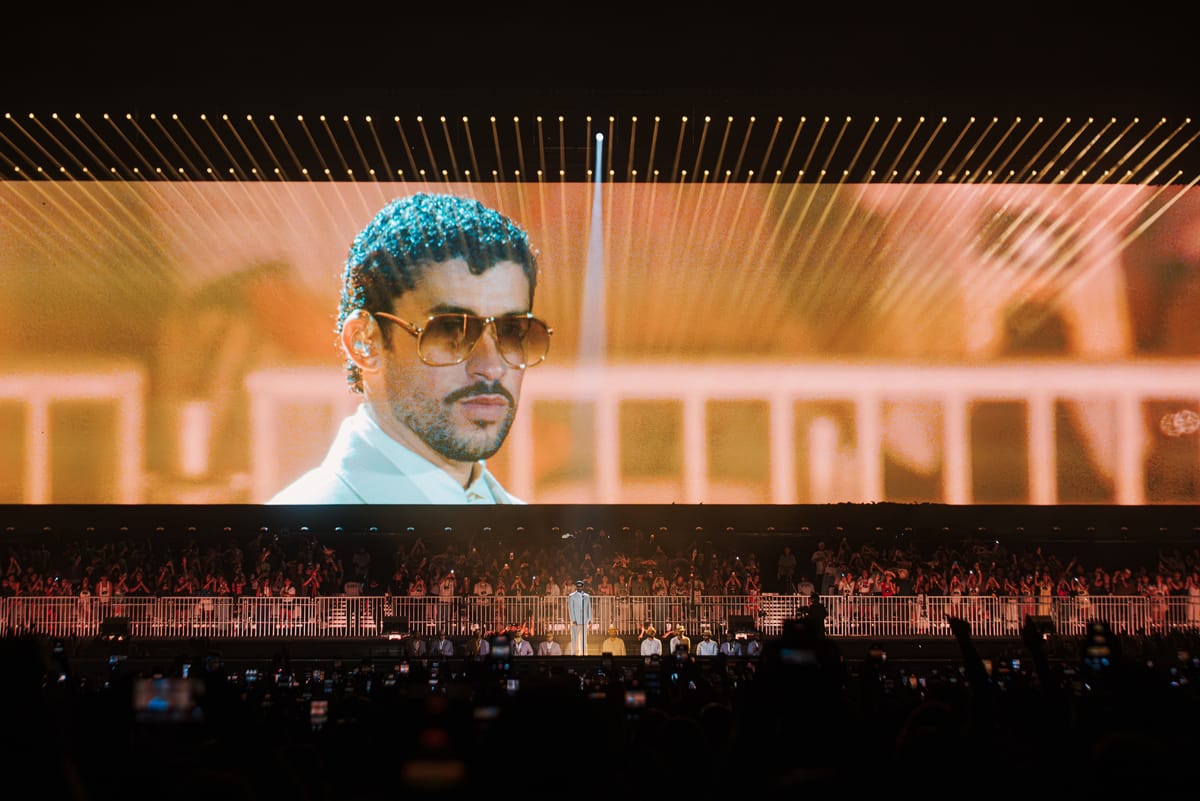
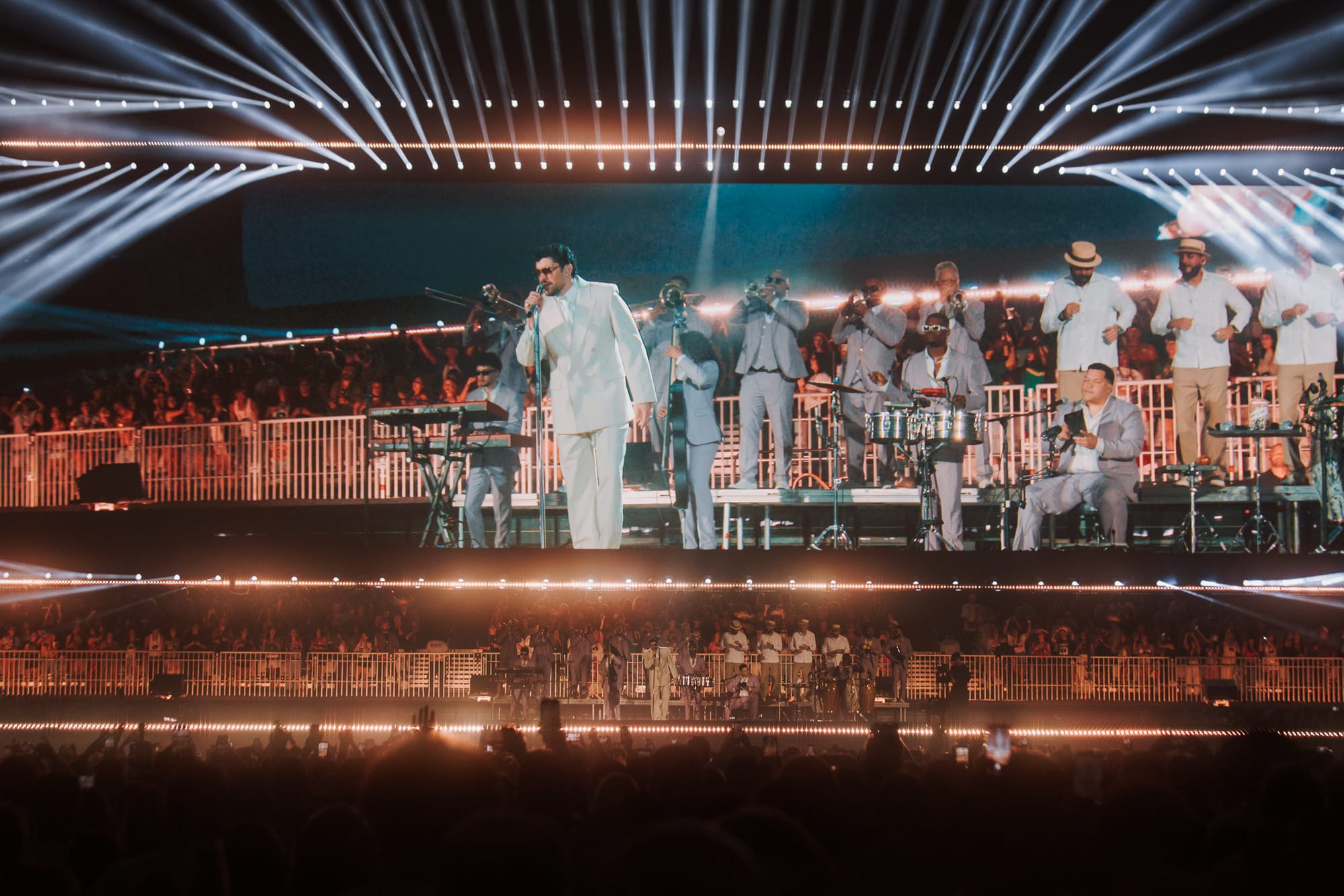
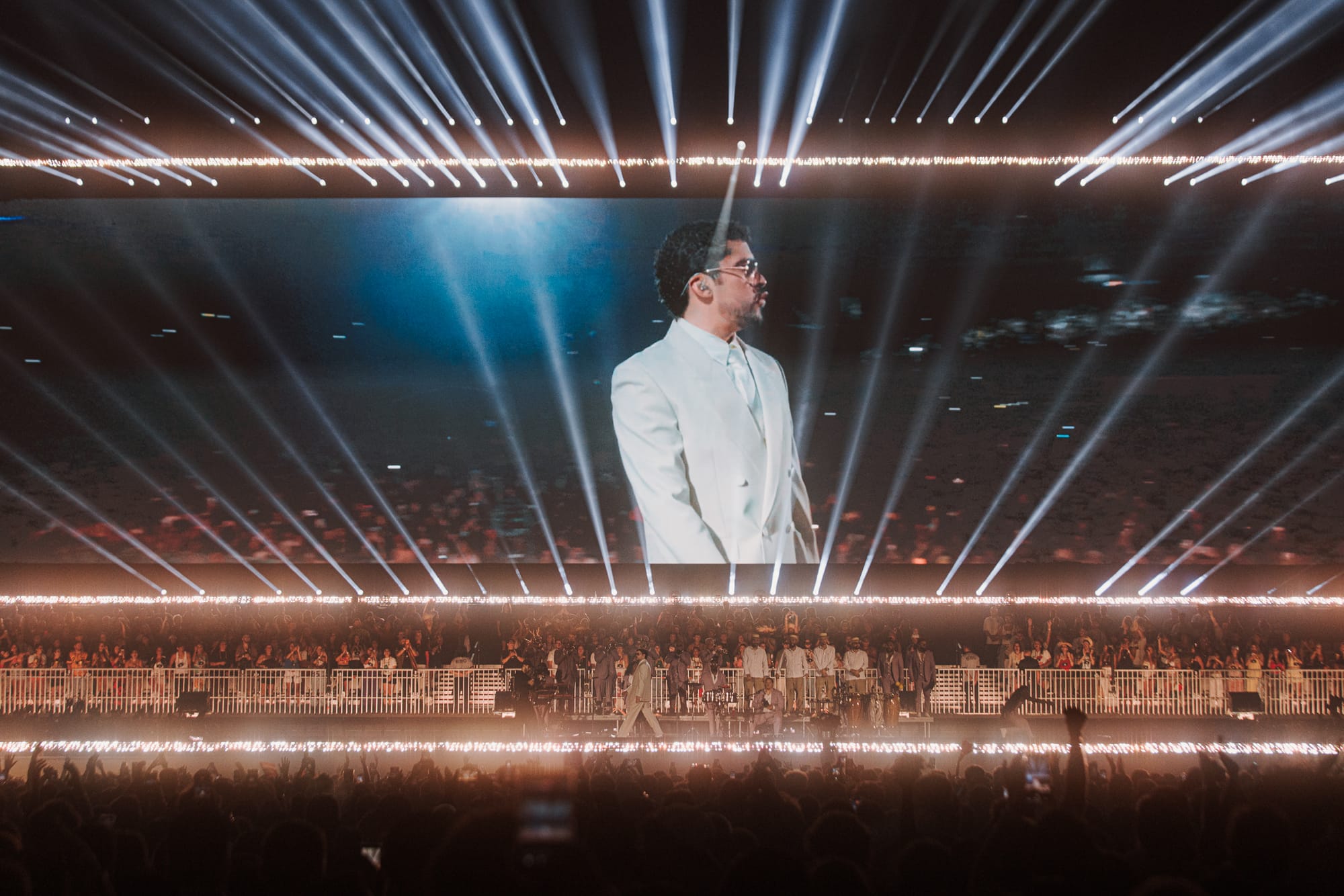
We weren't let down – and neither was Bad Bunny, real name Benito Ocasio. After he got on stage, the artist went a few minutes without saying a word, just reveling in the shouts and applause of the Brazilian audience, seeing him live for the first time after one decade of his career. The Puerto Rican singer declared he was honored to be in Brazil for the first time, and it did not sound like an empty affirmation: doing what many international artists don't do, Bad Bunny brought the full structure of his tour to the stadium, including the casita, a house-shaped stage on the other side of the venue.
Between the main stage and the casita, it seems like Benito divides his concert between the sacred and the profane. On the main stage, during the first and last section of the show, he brought out his salsa band to accompany him on his more melodic, sentimental tracks, where he could display the full range of his vocals – which surprised me on how powerful they sounded live. His big suit and glasses later became short shorts and sunglasses in the casita, while he thrust his hips to his more sexual, energetic reggaeton tracks – the highlight, for me, was "Vete", a YHLQMDLG cut that was exclusive to his first São Paulo show. This dichotomy is known all too well by the audience in Brazil, a country where sentimentalism and romance goes hand in hand with sexual expression, especially in pop music.
The 2-and-a-half-hour concert was a give and take between Bad Bunny and his audience. The singer wore a Brazilian soccer jersey, made sure one of his musicians played the intro to "Si Veo a Tú Mama", which is derived from "Garota de Ipanema", and hugged fans in the audience. In return, the audience shouted the lyrics to not only his biggest hits, but also deeper cuts like DTMF's standout track "PIToRRO DE COCO".
Benito took a risk. Other reggaeton and Spanish-speaking artists haven't fared so well in Brazil: J Balvin and Rauw Alejandro played flopped, half-empty dates in São Paulo in the last few years; Rosalía's Lux Rio de Janeiro tour has not sold out either of its dates in a much smaller arena.
What's special about Bad Bunny is that he's willing to connect with our culture, and not in a condescending or obvious way, but in a meaningful one. His love of Puerto Rico and questioning of colonialism and its oppressive history speaks to our own complicated relationship with our country.
Through his critiques and ambitions, Bad Bunny embodies a significant part of what being a latino is: resisting a massive, stifling cultural hegemony from the United States and, at the same time, understanding it as part of our own history. And, during his baile inolvidable, he made sure everybody present felt a part of the story he was telling.
Echoing the mantra he's been repeating everywhere – from the Super Bowl stage to the Grammy Awards – about the power of love and unity, Bad Bunny broke the final barrier to his global success: Brazil, the country long said to not like reggaeton or Latin music because of a "language barrier." For Benito, there is no such thing; he speaks the universal language of great, heartfelt music.

What do you think?
Show comments / Leave a comment